Author Archives: abhibhushan

Cannought Place

India /Maharashtra /Aurangabad /Aurangabad

Sight Address : Cannought Place,Aurangabad Edit

Detail InformationEdit

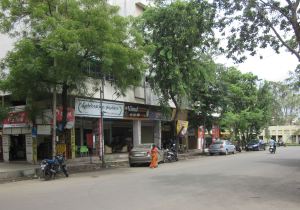
Connaught is a shopper’s paradise in Aurangabad. Any shopaholic would delight in the wide range of products Connaught has to offer. The place houses a Kam Khab, the golden and silver thread mixed with cotton and used to make the Himroo Shawls and Sarees, and is available across many showrooms in the market area. A shopper’s paradise of Aurangabad, Connaught offers different patterns and embroidery material inspired from the Ajanta and Ellora Caves that can be used as Saree borders. Complex Paithani Sarees are weaved here, making use of age old traditions.


History

Edit

N.A.

Must SeeEdit

Popular

Visiting TimeEdit

Sunrise to Sunset

Closed OnEdit

N.A.

Best Season to VisitEdit

October to March.

Best Time To VisitEdit

Morning, Afternoon , Evening,

Time Required for SightseeingEdit

N.A.

Ticket Required : No Edit

Individual National Adult Rs. : N.A.

Kids Rs. : N.A.

Individual Foreigner Adult Rs. : N.A.

Kids Rs. : N.A.

Still Photo Camera Rs. : N.A.

Video Camera Rs. : N.A.

Guide Required : Yes Edit

Approximate cost: Rs 100

Dress Code (If Any) : No Edit

Dress Require: N.A.

Restaurants NearbyAdd / Edit

  • N.A. ;  N.A. ; Ph/M –  N.A. ; Food Serve –  N.A.

How to ReachEdit

Taxi : The taxi stand is next to the MSRTC bus stand; share jeeps also depart from here for destinations around Aurangabad. Expect to pay Rs.600 for a full-day tour in a rickshaw, or Rs.900 in a taxi.

Bus : MSRTC also operates an intra-city bus service called ‘Aurangabad City Bus’ which connects different parts of the city together along with connecting the city to its nearby suburbs. The bus system is even more complicated for those who do not speak the local Marathi language, which equates to just about every foreign visitor here. Your best bet is to ask someone in your hotel before you leave what bus you would need to take to get to your planned destination. If you can track down this bus and get on as well as let the driver know your destination, then buses here are very convenient and inexpensive at just a couple of rupees per trip.

Train : Aurangabad’s train station (Station Rd East) is not on a main line, but two heavily-booked trains, the Tapovan Express (2nd class/chair ₹102/338, 7½ hours, 2.35pm) and the Janshatabdi Express (2nd class/chair ₹127/420, 6½ hours, 6am) run direct to/from Mumbai. For Hyderabad (Secunderabad), take the Devagiri Express (sleeper/2AC ₹224/822, 10 hours,4.05am). To reach northern or eastern India,take a bus to Jalgaon and board a train there.

Air : Aurangabad Airport, popularly known as the Chikalthana airport is the main domestic airport here. It is situated 10 km east of the city. Both Indian Airlines and Jet Airways have a daily flight to Mumbai (Bombay). The airport is 10km east of town. En route are the offices of Indian Airlines (2485241; Jalna Rd) and Jet Airways (2441392; Jalna Rd) There are daily flights to Delhi, with a stopover in Mumbai. Fares start from around Rs.1500. Taxis are available to and from airport.

Others : N.A.

Things to CarryEdit

Carry bottle of drinking water and some food.

Safety / WarningEdit

Eat safely (no street stall foods, no buffets, eat fruits/veg that can be peeled and well-cooked food, drink sealed bottled water). Use sun screen/mosquito repellent, put a hat and sunglasses on your child.Wear closed shoes, not sandals.

HelplineEdit

Ambulance 108
Fire 101
Police Stations 100
Railway Enquiry 131
Tourist Information Office 0240-2331222

Gallery

View All Sight of Aurangabad... Click Here

The Ajanta Caves
The Ellora Caves
Bibi ka Maqbara

Bibi ka Maqbara

India /Maharashtra /Aurangabad /Aurangabad

Sight Address : Bibi ka Maqbara,Aurangabad, India Edit

Detail InformationEdit

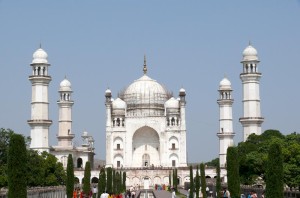
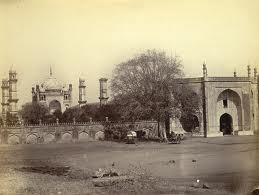
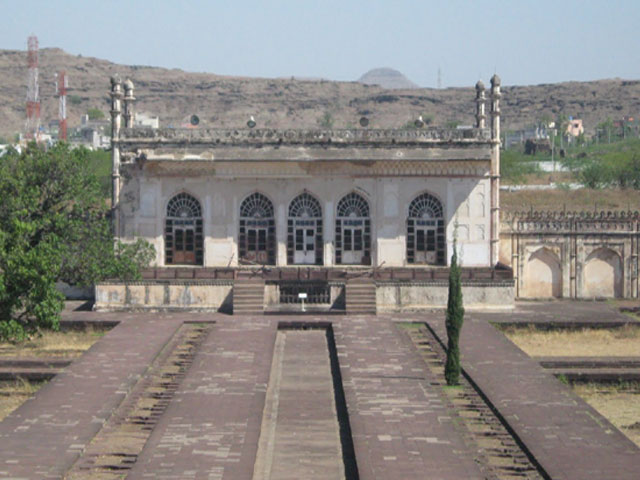
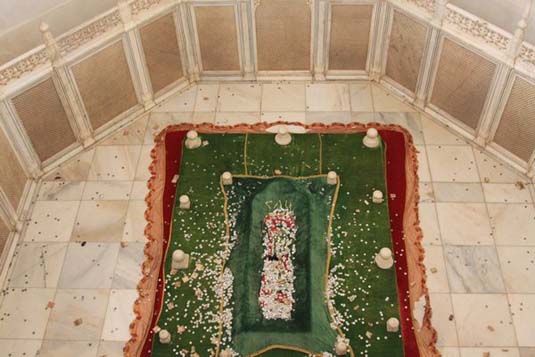
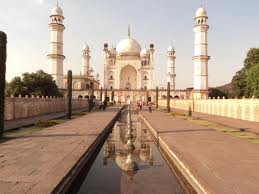
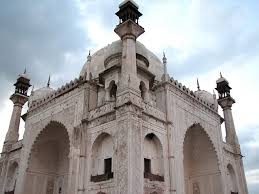
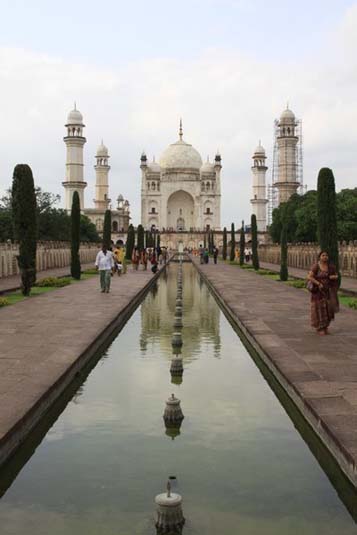
Bibi Ka Maqbara is situated 5 km away from Aurangabad. Aurangazeb’s son, Prince Azam Shah built it in 1678 in the memory of his mother Begum Rabia Durani. This mausoleum is a replica of the famous Taj Mahal. Despite the layout and surrounding of the tomb is very much similar to Taj Mahal, somehow the architecture fails to produce the magic of the Taj. Hence, it is considered to be a poor imitation of the Taj Mahal.The chief architect of the monument is a Persian called Ustad – Ata – Ullah. The inscription on the walls of the tomb reveals that it cost precisely Rs. 665,283 and 7 Annas to build this monument. Bibi Ka Maqbara has four towering minarets like Taj Mahal. An octagonal lattice-screen of white marble surrounds the raised plinth supporting Rabia Daurani’s grave inside the tomb. The tips of its pillars are made of red stone. The monument becomes so beauty when its reflection falls on the water as soon as the sun’s first rays fall on it. MTDC organizes a fair every October as the Bibi Ka Maqbara festival. Bibi Ka Maqbara is a maqbara located in Aurangabad, Maharastra, India. It was commissioned by the Mughal Emperor Aurangzeb in the late 17th century in the memory of his first wife, Dilras Banu Begum (also known as Rabia Durrani). It bears a striking resemblance to the famous Taj Mahal, the mausoleum of her mother-in-law, Mumtaz Mahal. Aurangzeb was not much interested in architecture, though he had built the small, but elegant, Pearl Mosque at Delhi. The Bibi Ka Maqbara was the largest structure that he had to his credit. The comparison to the Taj Mahal has resulted in a general ignorance of the monument. The mausoleum is also called the Dakkhani Taj (Taj of the Deccan). It is the most conspicuous landmark of Aurangabad and its historic city.

Bibi ka Maqbara

Bibi ka Maqbara

HistoryEdit

Bibi Ka Maqbara is situated 5 km away from Aurangabad. Aurangazeb’s son, Prince Azam Shah built it in 1678 in the memory of his mother Begum Rabia Durani, the layout and surrounding of the tomb is very much similar to Taj Mahal,. It was commissioned by the Mughal Emperor Aurangzeb in the late 17th century in the memory of his first wife, Dilras Banu Begum (also known as Rabia Durrani). The chief architect of the monument is a Persian called Ustad – Ata – Ullah. The inscription on the walls of the tomb reveals that it cost precisely Rs. 665,283 and 7 Annas to build this monument.

Must SeeEdit

Attraction

Visiting TimeEdit

N.A.

Closed OnEdit

N.A.

Best Season to VisitEdit

October to March.

Best Time To VisitEdit

Morning, Afternoon , Evening,

Time Required for SightseeingEdit

N.A.

Ticket Required : Yes Edit

Individual National Adult Rs. : Rs 5

Kids Rs. : N.A.

Individual Foreigner Adult Rs. : Rs. 100

Kids Rs. : N.A.

Still Photo Camera Rs. : N.A.

Video Camera Rs. : N.A.

Guide Required : No Edit

Approximate cost: N.A.

Dress Code (If Any) : No Edit

Dress Require: N.A.

Restaurants NearbyAdd / Edit

  • N.A. ;  N.A. ; Ph/M –  N.A. ; Food Serve –  N.A.

How to ReachEdit

Taxi : The taxi stand is next to the MSRTC bus stand; share jeeps also depart from here for destinations around Aurangabad. Expect to pay Rs.600 for a full-day tour in a rickshaw, or Rs.900 in a taxi.

Bus : MSRTC also operates an intra-city bus service called ‘Aurangabad City Bus’ which connects different parts of the city together along with connecting the city to its nearby suburbs. The bus system is even more complicated for those who do not speak the local Marathi language, which equates to just about every foreign visitor here. Your best bet is to ask someone in your hotel before you leave what bus you would need to take to get to your planned destination. If you can track down this bus and get on as well as let the driver know your destination, then buses here are very convenient and inexpensive at just a couple of rupees per trip.

Train : Aurangabad’s train station (Station Rd East) is not on a main line, but two heavily-booked trains, the Tapovan Express (2nd class/chair ₹102/338, 7½ hours, 2.35pm) and the Janshatabdi Express (2nd class/chair ₹127/420, 6½ hours, 6am) run direct to/from Mumbai. For Hyderabad (Secunderabad), take the Devagiri Express (sleeper/2AC ₹224/822, 10 hours,4.05am). To reach northern or eastern India,take a bus to Jalgaon and board a train there.

Air : Aurangabad Airport, popularly known as the Chikalthana airport is the main domestic airport here. It is situated 10 km east of the city. Both Indian Airlines and Jet Airways have a daily flight to Mumbai (Bombay). The airport is 10km east of town. En route are the offices of Indian Airlines (2485241; Jalna Rd) and Jet Airways (2441392; Jalna Rd) There are daily flights to Delhi, with a stopover in Mumbai. Fares start from around Rs.1500. Taxis are available to and from airport.

Others : N.A.

Things to CarryEdit

Carry bottle of drinking water and some food.

Safety / WarningEdit

Eat safely (no street stall foods, no buffets, eat fruits/veg that can be peeled and well-cooked food, drink sealed bottled water). Use sun screen/mosquito repellent, put a hat and sunglasses on your child.Wear closed shoes, not sandals.

HelplineEdit

Ambulance 108
Fire 101
Police Stations 100
Railway Enquiry 131
Tourist Information Office 0240-2331221

Gallery


View All Sight of Aurangabad... Click Here

The Ajanta Caves
The Ellora Caves
Bibi ka Maqbara

Baradari Iwaz Khan Aqueduct

India /Maharashtra /Aurangabad /Aurangabad

Sight Address : Baradari Iwaz Khan Aqueduct, Aurangabad, India Edit

Detail InformationEdit

Baradari Iwaz Khan Aqueduct is in ruins with only rubble remaining. The force of the attacks of the Marathas an extended a role in battering up the walls. The city of Aurangabad holds some great ruins which have been beaten with the passage of time but still hold great attraction for tourists and historians. The Baradari Iwaz Khan Aqueduct is among on of the many great ruins in Aurangabad. It is a historical place in central Aurangabad of which only the rubble and ruin remain in place today. It was once a great complex on which time and wars have taken a toll. The walls of the complex have been beaten up and partially disintegrated due to the passage of time and also due to the numerous attacks of the Maratha warriors during many historical wars. Looking at the battered walls, one can imagine the grandeur and beauty of this place when it was in its prime. The Baradari Iwaz Khan Aqueduct showcases the great style of ancient architecture and is a must visit place for historians and romantics.

Baradari Iwaz Khan Aqueduct in Aurangabad

Baradari Iwaz Khan Aqueduct in Aurangabad

HistoryEdit

Baradari Iwaz Khan Aqueduct showcases the great style of ancient architecture and is a place for historians and romantics.

Must SeeEdit

Popular

Visiting TimeEdit

8 am to 6 pm

Closed OnEdit

N.A.

Best Season to VisitEdit

October to March.

Best Time To VisitEdit

Morning, Afternoon ,

Time Required for SightseeingEdit

N.A.

Ticket Required : Yes Edit

Individual National Adult Rs. : Rs 10

Kids Rs. : N.A.

Individual Foreigner Adult Rs. : Rs 100

Kids Rs. : N.A.

Still Photo Camera Rs. : N.A.

Video Camera Rs. : N.A.

Guide Required : No Edit

Approximate cost: N.A.

Dress Code (If Any) : No Edit

Dress Require: N.A.

Restaurants NearbyAdd / Edit

  • N.A. ;  N.A. ; Ph/M –  N.A. ; Food Serve –  N.A.

How to ReachEdit

Taxi : The taxi stand is next to the MSRTC bus stand; share jeeps also depart from here for destinations around Aurangabad. Expect to pay Rs.600 for a full-day tour in a rickshaw, or Rs.900 in a taxi.

Bus : MSRTC also operates an intra-city bus service called ‘Aurangabad City Bus’ which connects different parts of the city together along with connecting the city to its nearby suburbs. The bus system is even more complicated for those who do not speak the local Marathi language, which equates to just about every foreign visitor here. Your best bet is to ask someone in your hotel before you leave what bus you would need to take to get to your planned destination. If you can track down this bus and get on as well as let the driver know your destination, then buses here are very convenient and inexpensive at just a couple of rupees per trip.

Train : Aurangabad’s train station (Station Rd East) is not on a main line, but two heavily-booked trains, the Tapovan Express (2nd class/chair ₹102/338, 7½ hours, 2.35pm) and the Janshatabdi Express (2nd class/chair ₹127/420, 6½ hours, 6am) run direct to/from Mumbai. For Hyderabad (Secunderabad), take the Devagiri Express (sleeper/2AC ₹224/822, 10 hours,4.05am). To reach northern or eastern India,take a bus to Jalgaon and board a train there.

Air : Aurangabad Airport, popularly known as the Chikalthana airport is the main domestic airport here. It is situated 10 km east of the city. Both Indian Airlines and Jet Airways have a daily flight to Mumbai (Bombay). The airport is 10km east of town. En route are the offices of Indian Airlines (2485241; Jalna Rd) and Jet Airways (2441392; Jalna Rd) There are daily flights to Delhi, with a stopover in Mumbai. Fares start from around Rs.1500. Taxis are available to and from airport.

Others : N.A.

Things to CarryEdit

Carry bottle of drinking water and some food.

Safety / WarningEdit

Eat safely (no street stall foods, no buffets, eat fruits/veg that can be peeled and well-cooked food, drink sealed bottled water). Use sun screen/mosquito repellent, put a hat and sunglasses on your child.Wear closed shoes, not sandals.

HelplineEdit

Ambulance 108
Fire 101
Police Stations 100
Railway Enquiry 131
Tourist Information Office 0240-2331220

Gallery


View All Sight of Aurangabad... Click Here

The Ajanta Caves
The Ellora Caves
Bibi ka Maqbara

Bani Begum Garden

India /Maharashtra /Aurangabad /Aurangabad

Sight Address : Bani Begum Garden is only 24 km from Aurangabad, Banu Begum Mogul Garden, National Highway 211, Khuldabad, Aurangabad, MH 431101. Edit

Detail InformationEdit

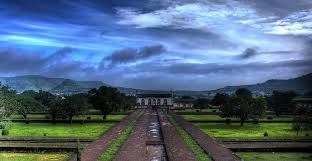
Bani Begum Gardens is an elegant garden located about 24 km from Aurangabad, in Maharashtra. At the centre of the garden there is a tomb of Bani Begum, the wife of one of Aurangzeb’s sons. Bani Begum Gardens, built in various styles, is equipped with massive domes, fountains and fluted pillars. The garden is a stands as a fine specimen of the architecture of a bygone era. Bani Begum Garden is a panoramic garden located 24 km from Aurangabad. The garden is known for its lush green surroundings and comfortable atmosphere. The garden got its name from the tomb of Bani Begum, wife of Aurangzeb’s son, which is found in middle of this garden. Fountains, fluted pillars and massive domes can be seen in the garden and is landscaped in the Mughal style and presents with architecture of the departed period. Bani Begum Garden is a beautiful, lush green garden located about 25 km from Aurangabad. Popular for its comforting ambience, the garden got its name from Bani Begum’s tomb that is placed in the middle of the garden. Bani Begum is Aurangzeb’s son – Azam Shah’s – wife.The garden consists of massive domes, fountains and fluted pillars and is a great example of the Mughal style and architecture of the departed period, making this site a must-visit.

Bani Begum Gardens Aurangabad

Bani Begum Gardens Aurangabad

HistoryEdit

Bani Begum was Aurangzeb’s son – Azam Shah’s – wife. The garden consists of massive domes, fountains and fluted pillars and is a great example of the Mughal style and architecture of the departed period.

Must SeeEdit

Attraction

Visiting TimeEdit

9 am – 5 pm

Closed OnEdit

N.A.

Best Season to VisitEdit

October to March.

Best Time To VisitEdit

Morning, Afternoon , Evening, & Night.

Time Required for SightseeingEdit

N.A.

Ticket Required : Yes Edit

Individual National Adult Rs. : Rs 10

Kids Rs. : N.A.

Individual Foreigner Adult Rs. : Rs 100

Kids Rs. : N.A.

Still Photo Camera Rs. : N.A.

Video Camera Rs. : N.A.

Guide Required : No Edit

Approximate cost: N.A.

Dress Code (If Any) : No Edit

Dress Require: N.A.

Restaurants NearbyAdd / Edit

  • N.A. ;  N.A. ; Ph/M –  N.A. ; Food Serve –  N.A.

How to ReachEdit

Taxi : The taxi stand is next to the MSRTC bus stand; share jeeps also depart from here for destinations around Aurangabad. Expect to pay Rs.600 for a full-day tour in a rickshaw, or Rs.900 in a taxi.

Bus : MSRTC also operates an intra-city bus service called ‘Aurangabad City Bus’ which connects different parts of the city together along with connecting the city to its nearby suburbs. The bus system is even more complicated for those who do not speak the local Marathi language, which equates to just about every foreign visitor here. Your best bet is to ask someone in your hotel before you leave what bus you would need to take to get to your planned destination. If you can track down this bus and get on as well as let the driver know your destination, then buses here are very convenient and inexpensive at just a couple of rupees per trip.

Train : Aurangabad’s train station (Station Rd East) is not on a main line, but two heavily-booked trains, the Tapovan Express (2nd class/chair ₹102/338, 7½ hours, 2.35pm) and the Janshatabdi Express (2nd class/chair ₹127/420, 6½ hours, 6am) run direct to/from Mumbai. For Hyderabad (Secunderabad), take the Devagiri Express (sleeper/2AC ₹224/822, 10 hours,4.05am). To reach northern or eastern India,take a bus to Jalgaon and board a train there.

Air : Aurangabad Airport, popularly known as the Chikalthana airport is the main domestic airport here. It is situated 10 km east of the city. Both Indian Airlines and Jet Airways have a daily flight to Mumbai (Bombay). The airport is 10km east of town. En route are the offices of Indian Airlines (2485241; Jalna Rd) and Jet Airways (2441392; Jalna Rd) There are daily flights to Delhi, with a stopover in Mumbai. Fares start from around Rs.1500. Taxis are available to and from airport.

Others : N.A.

Things to CarryEdit

Carry bottle of drinking water and some food.

Safety / WarningEdit

Eat safely (no street stall foods, no buffets, eat fruits/veg that can be peeled and well-cooked food, drink sealed bottled water).Use sun screen/mosquito repellent, put a hat and sunglasses on your child.Wear closed shoes, not sandals.

HelplineEdit

Ambulance 108
Fire 101
Police Stations 100
Railway Enquiry 131
Tourist Information Office 0240-2331219

Gallery


View All Sight of Aurangabad... Click Here

The Ajanta Caves
The Ellora Caves
Bibi ka Maqbara

The Ellora Caves

India /Maharashtra /Aurangabad /Aurangabad

Sight Address : The Ellora Caves is from Aurangabad Ellora is 30 km. Edit

Detail InformationEdit

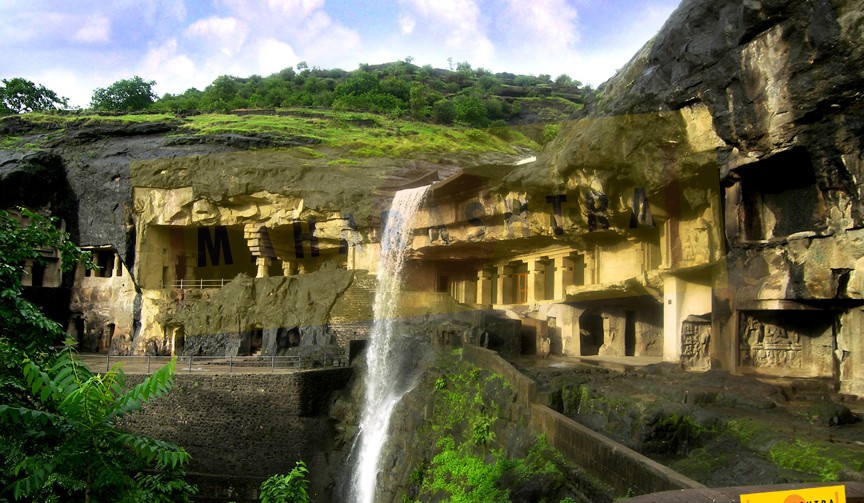
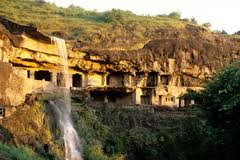
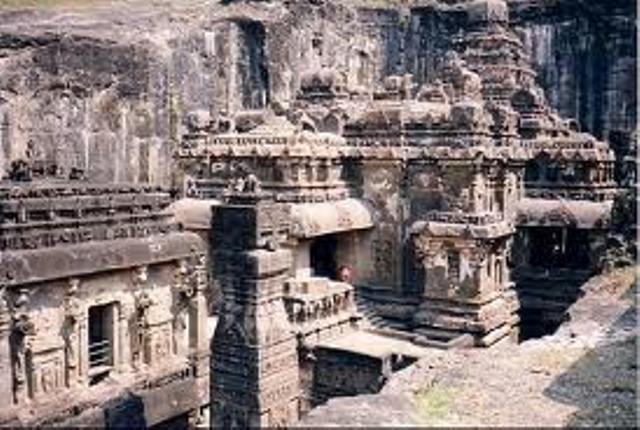
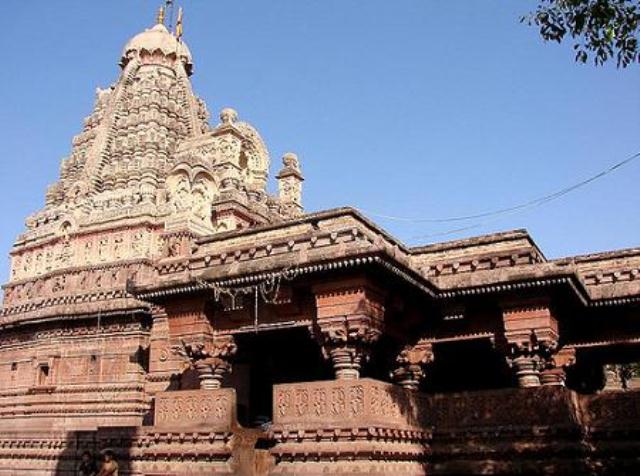
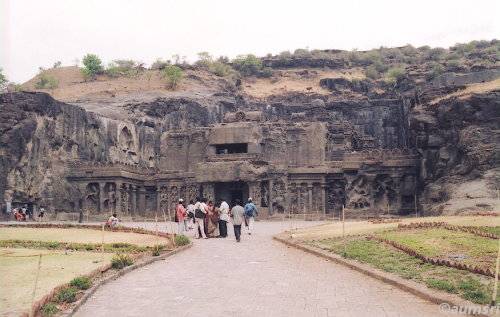
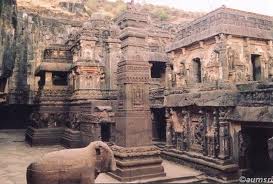
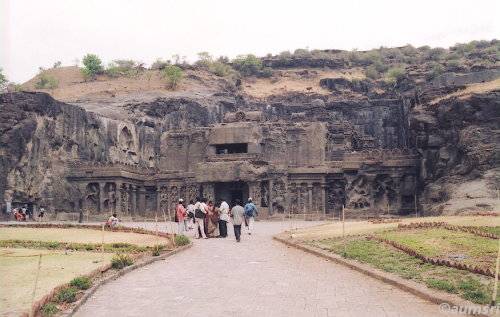
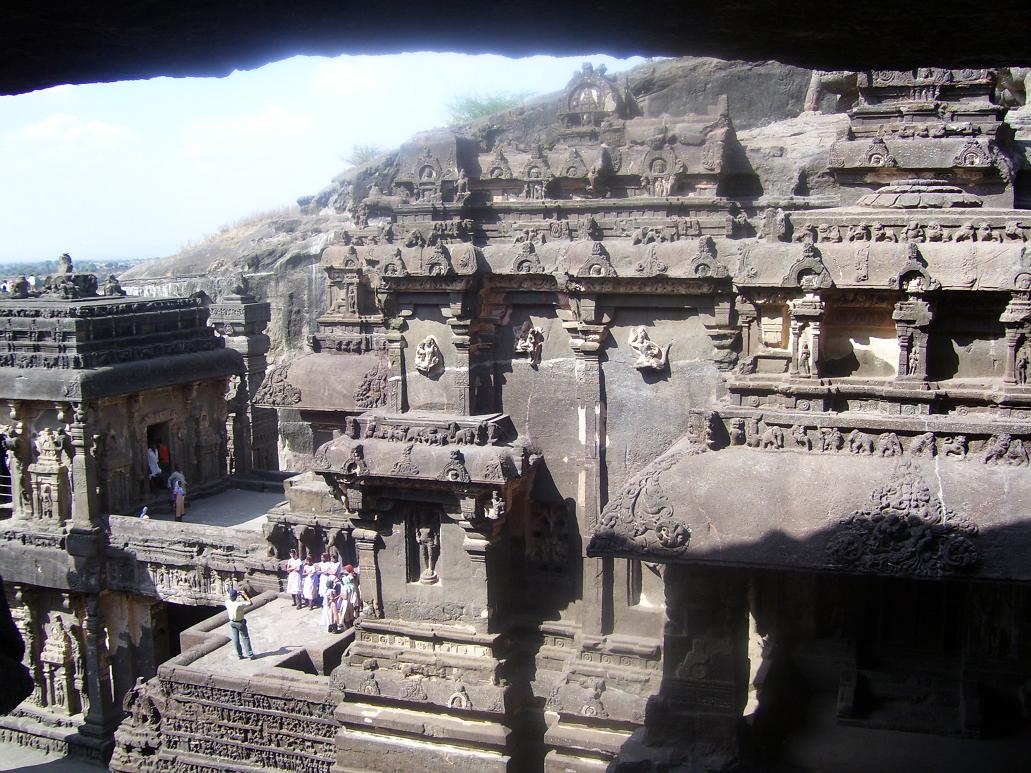
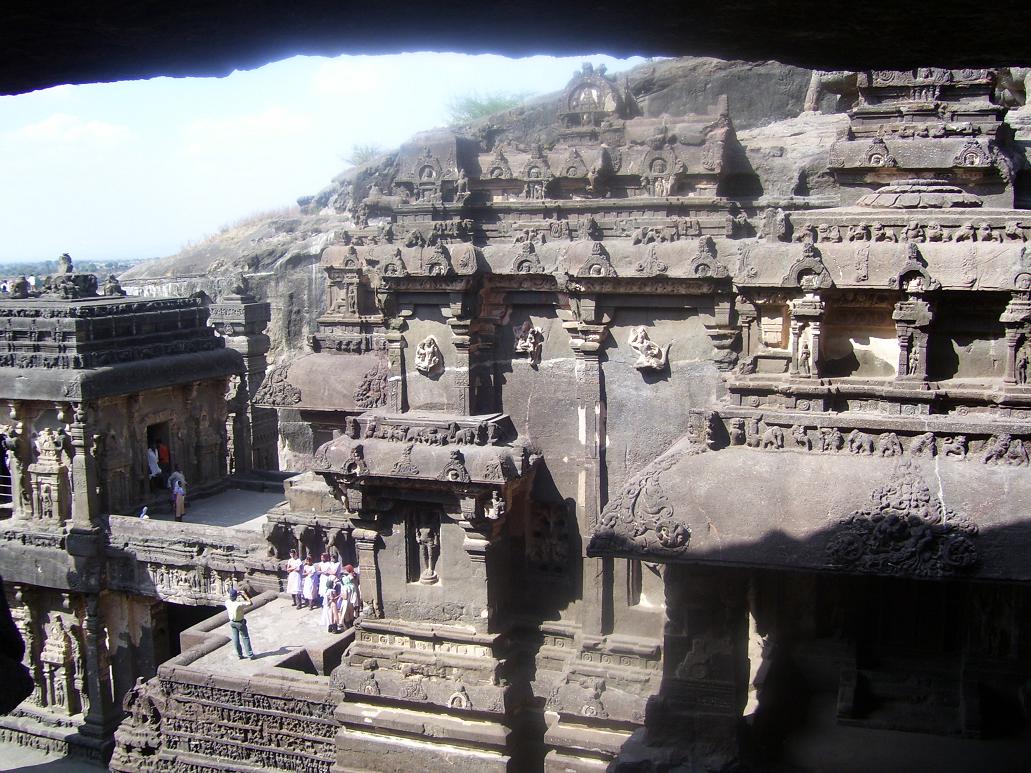
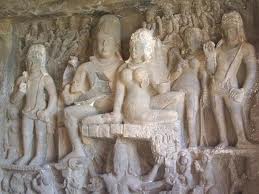
The Ellora caves, locally known as ‘Verul Leni’ is located on the Aurangabad-Chalisgaon road at a distance of 30 km north-northwest of Aurangabad, the district headquarters. The name Ellora itself inspires everyone as it represents one of the largest rock-hewn monastic-temple complexes in the entire world. Ellora is also world famous for the largest single monolithic excavation in the world, the great Kailasa (Cave 16). The visit to these caves is enjoyed maximum during monsoon, when every stream is filled with rainwater, and the entire environ is lush green. The monsoon is not only a season of rains in this part, the local visitors are attracted to visit these ideal locations to have a glimpse of the mother nature in full bloom. The caves are hewn out of the volcanic basaltic formation of Maharashtra, known as ‘Deccan Trap’, the term trap being of Scandinavian origin representing the step like formation of the volcanic deposits. The rock formation, on weathering has given rise to the appearance of terraces with flat summits. At Ellora, one can also have a glimpse of the channels (near Cave 32) through which the volcanic lava once flowed. These channels, due to overheating, have a characteristic brownish red colour. Similar rock was used in the construction of the Grishneshwar Temple nearby and also utilised for the flooring of the pathways at Bibi-ka-Maqbara. The hills in which the caves are hewn, forms part of the Sahyadri ranges of the Deccan and dated to the Cretaceous era of the Geological time scale (about 65 million years ago). The hills rise abruptly from the surrounding plains on the south and west, the western surface being extensively utilised for hewing the cave complexes. The hill also supports several streams, the prominent among them being the Elaganga, which drains into the Shiv, a stream of the Godavari river system. The Elaganga is in its full vigour during the monsoon, when the overflowing waters of a barrage in the upstream near Mahismati allows the gushing waters to land at “Sita-ki-nahani” near Cave 29 as a crashing waterfall. The volcanic lava flowed during different periods, gave rise to extensive horizontal flows alternating with vesicular trap beds. The vesicular traps formed the upper portion of each of the massive trap beds. The different lava flows also gave rise to vertical as well as horizontal joints in the rock formation. Depending upon the nature and mineralogical content of the lava flow, the rock formations also varied in character and texture, giving rise to various qualities like coarse grained, fine grained formations. The ancient builders at Ellora, like other places, particularly chose the fine grained formations of the Deccan trap, ideal for sculpting and rock hewing. In addition to this, the ancient builders also traced the horizontal and vertical joints in the rock formation to minimise the labour and time during excavation and rock splitting. The basaltic rock is also ideal for rock hewing, as they are soft during the initial excavation and hardens on exposure to environment. The epitome of ancient Indian rock-cut architecture, these caves were chipped out laboriously over five centuries by generations of Buddhist, Hindu and Jain monks. Monasteries, chapels,temples – the caves served every purpose,and they were stylishly embellished with a profusion of remarkably detailed sculptures. Unlike the caves at Ajanta, which are carved into a sheer rock face, the Ellora caves line a 2km-long escarpment, the gentle slope of which allowed architects to build elaborate courtyards in front of the shrines, and render them with sculptures of a surreal quality. Ellora has 34 caves in all: 12 Buddhist (AD 600–800), 17 Hindu (AD 600–900) and five Jain (AD 800–1000). The grandest, however, is the awesome Kailasa Temple (Cave 16), the world’s largest monolithic sculpture, hewn top to bottom against a rocky slope by 7000 labourers over a 150-year period. Dedicated to Lord Shiva, it is clearly among the best that ancient Indian architecture has to offer.
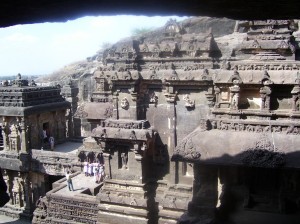
The Ellora Caves.in Aurangabad

The Ellora Caves.in Aurangabad

HistoryEdit

The Ellora has 34 caves in all: 12 Buddhist (AD 600–800), 17 Hindu (AD 600–900) and five Jain (AD 800–1000). The grandest, however, is the awesome Kailasa Temple (Cave 16), the world’s largest monolithic sculpture, hewn top to bottom against a rocky slope by 7000 labourers over a 150-year period. Dedicated to Lord Shiva, it is clearly among the best that ancient Indian architecture has to offer. The epitome of ancient Indian rock-cut architecture, these caves were chipped out laboriously over five centuries by generations of Buddhist, Hindu and Jain monks. Monasteries, chapels,temples – the caves served every purpose,and they were stylishly embellished with a profusion of remarkably detailed sculptures.Unlike the caves at Ajanta (p 772 ), which are carved into a sheer rock face, the Ellora caves line a 2km-long escarpment, the gentle slope of which allowed architects to build elaborate courtyards in front of the shrines,and render them with sculptures of a surreal quality.

Must SeeEdit

Attraction

Visiting TimeEdit

Sunrise to 10:00 pm

Closed OnEdit

N.A.

Best Season to VisitEdit

October to March.

Best Time To VisitEdit

Morning, Afternoon.

Time Required for SightseeingEdit

N.A.

Ticket Required : Yes Edit

Individual National Adult Rs. : Rs.10

Kids Rs. : N.A.

Individual Foreigner Adult Rs. : Rs.250

Kids Rs. : N.A.

Still Photo Camera Rs. : N.A.

Video Camera Rs. : Rs. 25

Guide Required : No Edit

Approximate cost: N.A.

Dress Code (If Any) : No Edit

Dress Require: N.A.

Restaurants NearbyAdd / Edit

  • Hotel Kailash ;  Ellora Caves,Auragabad District, Ellora 431102, India ; Ph/M –  02437 244 446 ; Food Serve –  N.A.

How to ReachEdit

Taxi : The taxi stand is next to the MSRTC bus stand; share jeeps also depart from here for destinations around Aurangabad. Expect to pay Rs.600 for a full-day tour in a rickshaw, or Rs.900 in a taxi.

Bus : MSRTC also operates an intra-city bus service called ‘Aurangabad City Bus’ which connects different parts of the city together along with connecting the city to its nearby suburbs. The bus system is even more complicated for those who do not speak the local Marathi language, which equates to just about every foreign visitor here. Your best bet is to ask someone in your hotel before you leave what bus you would need to take to get to your planned destination. If you can track down this bus and get on as well as let the driver know your destination, then buses here are very convenient and inexpensive at just a couple of rupees per trip.

Train : Aurangabad’s train station (Station Rd East) is not on a main line, but two heavily-booked trains, the Tapovan Express (2nd class/chair ₹102/338, 7½ hours, 2.35pm) and the Janshatabdi Express (2nd class/chair ₹127/420, 6½ hours, 6am) run direct to/from Mumbai. For Hyderabad (Secunderabad), take the Devagiri Express (sleeper/2AC ₹224/822, 10 hours,4.05am). To reach northern or eastern India,take a bus to Jalgaon and board a train there.

Air : Aurangabad Airport, popularly known as the Chikalthana airport is the main domestic airport here. It is situated 10 km east of the city. Both Indian Airlines and Jet Airways have a daily flight to Mumbai (Bombay). The airport is 10km east of town. En route are the offices of Indian Airlines (2485241; Jalna Rd) and Jet Airways (2441392; Jalna Rd) There are daily flights to Delhi, with a stopover in Mumbai. Fares start from around Rs.1500. Taxis are available to and from airport.

Others : N.A.

Things to CarryEdit

Carry bottle of drinking water and some food.

Safety / WarningEdit

Eat safely (no street stall foods, no buffets, eat fruits/veg that can be peeled and well-cooked food, drink sealed bottled water). Use sun screen/mosquito repellent, put a hat and sunglasses on your child.Wear closed shoes, not sandals.

HelplineEdit

Ambulance 108
Fire 101
Police Stations 100
Railway Enquiry 131
Tourist Information Office 0240-2331218

Gallery

View All Sight of Aurangabad... Click Here

The Ajanta Caves
The Ellora Caves
Bibi ka Maqbara

The Ajanta Caves

India /Maharashtra /Aurangabad /Aurangabad

Sight Address : Ajanta Caves is near Jalgaon (61 kms), and from Aurangabad, India, The Ajanta Caves is 107 km. Edit

Detail InformationEdit

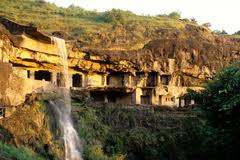
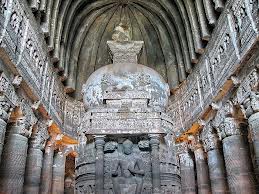
The Ajanta Caves situated about 107 kilo meters from the Aurangabad city and just 61 kms from Jalgaon; the rock-cut caves of Ajanta nestle in a panoramic gap, in the form of a massive horse shoe. Among the finest examples of some of the earliest (from the second century BCE) Buddhist architecture, caves-paintings and sculptures, these caves comprise Chaitya Halls, or shrines, dedicated to Lord Buddha and Viharas, or monasteries, used by Buddhist monks for meditation and the study of Buddhist teachings. Since 1983, the Ajanta Caves have been a UNESCO World Heritage Site. Way back in1819, a party of British army officers on a tiger hunt in the forest of western Deccan, suddenly spotted their prey, on the far side of a loop in the Waghora River, high up on the horseshoe- shaped rock face; the hunting party saw the tiger, silhouetted against the fixed front of a cave. There are 29 caves Ajanta (as officially numbered by the Archaeological Survey of India), of which 9, 10, 19, 26 and 29 are chaitya-grihas and the rest are monasteries. These caves were discovered in AD 1819. All paintings show heavy religious influence and centre around Buddha, Bodhisattvas, incidents from the life of Buddha and the Jatakas.The paintings are executed on a ground of mud-plaster in the tempera technique. The paintings on the walls, illustrate the events in the life of Prince Gautama Buddha, the founder of Buddhism and in the more popular Jatakas stories pertaining to Buddha’s previous incarnation. Incidentally they contain the scenes of semi-mythological history, the royal court and popular life of the ancient times, as told in romances and plays. Some pictures recall the Greek and Roman compositions and proportions, few late resemble to Chinese manners to some extent. But majority belongs to a phase, which is purely Indian, as they are found nowhere else.

Ajanta Caves in Aurangabad

Ajanta Caves in Aurangabad

HistoryEdit

Ajanta was a kind of college monastery, like other ancient Buddhist monasteries, with a large emphasis on teaching, and divided into several different colleges for living and for some of the education, under a central direction. The layout of the site reflects this organizational structure, with most of the caves only connected via the exterior. The seventh-century travelling scholar Xuanzang informs us that Dinnaga, the celebrated Buddhist philosopher and controversialist, author of well-known books on logic, lived there in the 5th century. In its prime the settlement must have accommodated several hundred teachers and pupils. Many monks who had finished their first training may have used Ajanta as a base to return to during the monsoon season from an itinerant lifestyle. Like other ancient Buddhist monasteries, The caves are generally agreed to have been made in two distinct periods, separated by several centuries.

Must SeeEdit

Must see

Visiting TimeEdit

9am until sunset (around 5.30 p.m.).

Closed OnEdit

Tuesday

Best Season to VisitEdit

October to March.

Best Time To VisitEdit

Morning, Afternoon.

Time Required for SightseeingEdit

N.A.

Ticket Required : Yes Edit

Individual National Adult Rs. : Rs. 10

Kids Rs. : N.A.

Individual Foreigner Adult Rs. : Rs. 250

Kids Rs. : N.A.

Still Photo Camera Rs. : N.A.

Video Camera Rs. : Rs. 25

Guide Required : No Edit

Approximate cost: N.A.

Dress Code (If Any) : No Edit

Dress Require: N.A.

Restaurants NearbyAdd / Edit

  • N.A. ;  N.A. ; Ph/M –  N.A. ; Food Serve –  N.A.

How to ReachEdit

Taxi : The taxi stand is next to the MSRTC bus stand; share jeeps also depart from here for destinations around Aurangabad. Expect to pay Rs.600 for a full-day tour in a rickshaw, or Rs.900 in a taxi.

Bus : MSRTC also operates an intra-city bus service called ‘Aurangabad City Bus’ which connects different parts of the city together along with connecting the city to its nearby suburbs. The bus system is even more complicated for those who do not speak the local Marathi language, which equates to just about every foreign visitor here. Your best bet is to ask someone in your hotel before you leave what bus you would need to take to get to your planned destination. If you can track down this bus and get on as well as let the driver know your destination, then buses here are very convenient and inexpensive at just a couple of rupees per trip.

Train : Aurangabad’s train station (Station Rd East) is not on a main line, but two heavily-booked trains, the Tapovan Express (2nd class/chair ₹102/338, 7½ hours, 2.35pm) and the Janshatabdi Express (2nd class/chair ₹127/420, 6½ hours, 6am) run direct to/from Mumbai. For Hyderabad (Secunderabad), take the Devagiri Express (sleeper/2AC ₹224/822, 10 hours,4.05am). To reach northern or eastern India,take a bus to Jalgaon and board a train there.

Air : Aurangabad Airport, popularly known as the Chikalthana airport is the main domestic airport here. It is situated 10 km east of the city. Both Indian Airlines and Jet Airways have a daily flight to Mumbai (Bombay). The airport is 10km east of town. En route are the offices of Indian Airlines (2485241; Jalna Rd) and Jet Airways (2441392; Jalna Rd) There are daily flights to Delhi, with a stopover in Mumbai. Fares start from around Rs.1500. Taxis are available to and from airport.

Others : N.A.

Things to CarryEdit

Bring a torch with you to the Ellora caves as many of them are quite dark and lighting is poor.

Safety / WarningEdit

Eat safely (no street stall foods, no buffets, eat fruits/veg that can be peeled and well-cooked food, drink sealed bottled water). Use sun screen/mosquito repellent, put a hat and sunglasses on your child.Wear closed shoes, not sandals.

HelplineEdit

Ambulance 108
Fire 101
Police Stations 100
Railway Enquiry 131
Tourist Information Office 0240-2331217

Gallery


View All Sight of Aurangabad... Click Here

The Ajanta Caves
The Ellora Caves
Bibi ka Maqbara
Panch Kuai

India /Gujarat /Jamnagar /Dwarka

Sight Address : Panch Kuai is located towards the east of Dwarka and lies on the other side of the Gomati River. Edit

Detail InformationEdit

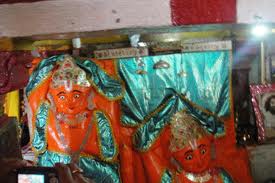
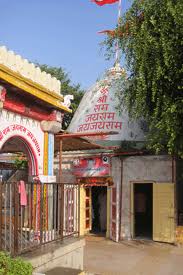
Panch Kuai, also known as the Panchard or five rivers, is venue of a popular Lakshmi-Narayan Temple, who is the main deity of the place. The Panchard Temple also features idols of Lord Krishna, Durvasa, Hanuman and Goddess Ambaji. This site boasts footprints of Pandavas, Charan Padooka, footprints of some powerful sages and Bhajan Caves. Moreover, there a tunnel at this site that leads to the nearby Vasai village.

Panch Kuai Dwarka

Panch Kuai Dwarka

HistoryEdit

N.A.

Must SeeEdit

Popular

Visiting TimeEdit

6.30 am to 1.00 pm And 5.00 pm to 9.30 pm

Closed OnEdit

N.A.

Best Season to VisitEdit

October to June

Best Time To VisitEdit

Morning,Evening And Night.

Time Required for SightseeingEdit

N.A.

Ticket Required : No Edit

Individual National Adult Rs. : N.A.

Kids Rs. : N.A.

Individual Foreigner Adult Rs. : N.A.

Kids Rs. : N.A.

Still Photo Camera Rs. : N.A.
Video Camera Rs. : N.A.
Guide Required : No Edit

Approximate cost: N.A.

Dress Code (If Any) : No Edit

Dress Require: N.A.

Restaurants NearbyAdd / Edit

  • N.A. ;  N.A. ; Ph/M –  N.A. ; Food Serve –  N.A.

How to ReachEdit

Taxi : Transfer taxi services are available.

Bus : An excellent network of state and national highways runs through the entire state of Gujarat connecting it with other Indian cities. Interstate and local buses connect Dwarka with other cities within and outside the state. Dwarka is on the state highway from Jamnagar to Dwarka. Direct buses available from Jamnagar and Ahmedabad. Dwarka municipality runs a local bus to take the pilgrims across various destinations of religious and tourist prominence. The departure timings of the bus are 8:00 & 14:00 each day while the total time of the journey is around five hours. The ticket prices are Rs. 30 for an adult and Rs. 15 for a child. Tickets can be booked near the vegetable market, which is also the starting point of the journey. Major destinations covered are Nageshwar, Gopi Talao, Bet Dwarka and Rukminimata temple.

Train : Dwarka has its own railway station which connects it to other major cities in India. Regular trains are available from nearby cities such as Jamnagar, Rajkot and Ahmedabad. The best way to reach the place is to board a train to any of the major cities around and take a train to Dwarka from there. Dwarka is a station on the Ahmedabad-Okha broad gauge railway line, with trains connecting it to Jamnagar (137 km), Rajkot (217 km) and Ahmedabad (471 km), and some trains that continue all the way down the coast through Vadodara, Surat, Mumbai, Goa, Karnataka, to the southern tip of India in Kerala.

Air : Jamnagar is the nearest airport from Dwarka while Rajkot is another option to access the place by air. Government run Indian Airlines and other private airlines such as Jet Airways and Air Deccan operate regular services to both these locations. Ahmaedabad is another major airport which is connected by regular flights from all the major Indian cities.

Others : Local transport facilities including tongas, auto rickshaws and buses are available from the main town.

Things to CarryEdit

Carry bottle of drinking water. Sun-screen, sun glasses, tissue-rolls, roll of duct-tape, extra batteries, torchlight, water, energy-bars are ‘must-carry’ along with a First-aid kit.

Safety / WarningEdit

Don’t wear footwear in Dwarka and in Somnath, there are so many temples and holy places that you are constantly wearing and removing your footwear. It may be better to use slip ons for such visits.
Don’t dress immodestly.
Electronic items not allowed.

HelplineEdit

Police 100
Fire 101
Ambulance 108
Child Helpline – 1098
Women Helpline Number -1091

Gallery

View All Sight of Dwarka... Click Here

Dwarkadeesh Temple
Rukshamanee Mandir
Nageshwar Temple

Sharada Peeth

India /Gujarat /Jamnagar /Dwarka

Sight Address : Shardha Peeth Dwarka, Gujarat, India.Edit

Detail InformationEdit

Sharada Peeth at Dwarka is one of the four pioneer seats created and set up in four different directions of India by Aadi Jagat Guru Shankaracharya, the most reserved religious dignitaries of Hindus. The one is westetn part of India at Dwarka is known as Sharada Peeth. True to its name Sharda, that is the Goddess of Knowledge Saraswati, Dwarka’s Sharada Peeth is an important knowledge centre to propagate the Hindu religion, culture and Sanskrit language. Sharada Peeth, just adjacent to the mythological Dwarkadheesh’s Jagat Mandir, has undergone transformation since last seven years. The whole premises is renovated. The ambience of the place is very holy and righteous. One gets a solace on reaching there.

Shardha Peeth Dwarka

Shardha Peeth Dwarka

HistoryEdit

Sharada Peeth is over 250 years old and is visited every year by thousands of pilgrims from across India.Adi Shankaracharya found this Peeth in 491 AD for withholding the traditions of India. This Peeth is also known by various names like Kalika Matha, which is in charge of the Sama Veda, the Paschimamnaya Matha and the Western Matha. Besides this, it has also a collection of oriental materials which include remains of old Dwarka that was submerged in the sea and some other old stony things. It also has preserved bomb-shells which Pakistanis threw during air-raids during 1965 war but could not damage Dwarka.

Must SeeEdit

Popular

Visiting TimeEdit

6:15 am and 9:00 pm.

Closed OnEdit

N.A.

Best Season to VisitEdit

October to June

Best Time To VisitEdit

Morning,Evening And Night.

Time Required for SightseeingEdit

N.A.

Ticket Required : No Edit

Individual National Adult Rs. : N.A.

Kids Rs. : N.A.

Individual Foreigner Adult Rs. : N.A.

Kids Rs. : N.A.

Still Photo Camera Rs. : N.A.

Video Camera Rs. : N.A.

Guide Required : No Edit

Approximate cost: N.A.

Dress Code (If Any) : No Edit

Dress Require: N.A.

Restaurants NearbyAdd / Edit

  • N.A. ;  N.A. ; Ph/M –  N.A. ; Food Serve –  N.A.

How to ReachEdit

Taxi : Transfer taxi services are available.

Bus : An excellent network of state and national highways runs through the entire state of Gujarat connecting it with other Indian cities. Interstate and local buses connect Dwarka with other cities within and outside the state. Dwarka is on the state highway from Jamnagar to Dwarka. Direct buses available from Jamnagar and Ahmedabad. Dwarka municipality runs a local bus to take the pilgrims across various destinations of religious and tourist prominence. The departure timings of the bus are 8:00 & 14:00 each day while the total time of the journey is around five hours. The ticket prices are Rs. 30 for an adult and Rs. 15 for a child. Tickets can be booked near the vegetable market, which is also the starting point of the journey. Major destinations covered are Nageshwar, Gopi Talao, Bet Dwarka and Rukminimata temple.

Train : Dwarka has its own railway station which connects it to other major cities in India. Regular trains are available from nearby cities such as Jamnagar, Rajkot and Ahmedabad. The best way to reach the place is to board a train to any of the major cities around and take a train to Dwarka from there. Dwarka is a station on the Ahmedabad-Okha broad gauge railway line, with trains connecting it to Jamnagar (137 km), Rajkot (217 km) and Ahmedabad (471 km), and some trains that continue all the way down the coast through Vadodara, Surat, Mumbai, Goa, Karnataka, to the southern tip of India in Kerala.

Air : Jamnagar is the nearest airport from Dwarka while Rajkot is another option to access the place by air. Government run Indian Airlines and other private airlines such as Jet Airways and Air Deccan operate regular services to both these locations. Ahmaedabad is another major airport which is connected by regular flights from all the major Indian cities.

Others : Local transport facilities including tongas, auto rickshaws and buses are available from the main town.

Things to CarryEdit

Carry bottle of drinking water. Sun-screen, sun glasses, tissue-rolls, roll of duct-tape, extra batteries, torchlight, water, energy-bars are ‘must-carry’ along with a First-aid kit.

Safety / WarningEdit

Don’t wear footwear in Dwarka and in Somnath, there are so many temples and holy places that you are constantly wearing and removing your footwear. It may be better to use slip ons for such visits.
Don’t dress immodestly.
Electronic items not allowed.

HelplineEdit

Police 100
Fire 101
Ambulance 108
Child Helpline – 1098
Women Helpline Number -1091

Gallery

View All Sight of Dwarka... Click Here

Dwarkadeesh Temple
Rukshamanee Mandir
Nageshwar Temple

Hanuman Dandi Temple

India /Gujarat /Jamnagar /Dwarka

Sight Address : Hanuman Dandi Temple is situated around 5 km from the main Dwarkadish Temple. Edit

Detail InformationEdit

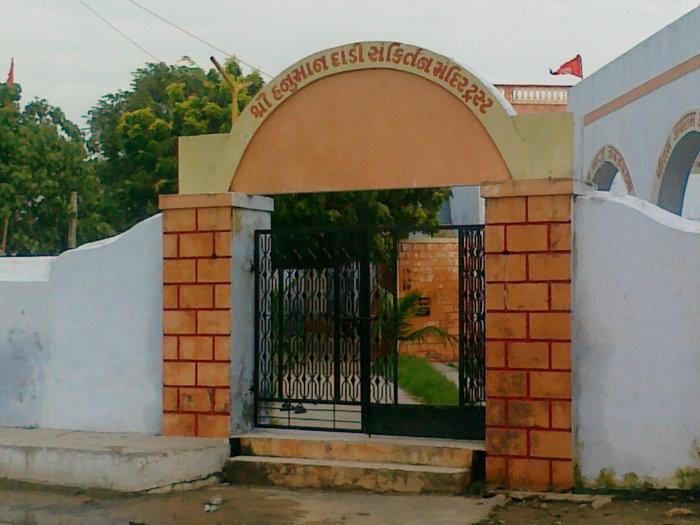
Hanuman Dandi Temple is the only temple in the whole India which has idols of Hanuman and his son Makardhwaj. Devotees coming to this temple take back home a supari (beetle nut) and when their wishes get fulfilled; they bring back the same supari, plated with gold. Cycle rickshaws, horse carts, auto rickshaws and buses are available from the town to travel to the famous Hanuman Dandi Temple.

Hanuman Dandi Temple dwarka

Hanuman Dandi Temple Dwarka

HistoryEdit

N.A.

Must SeeEdit

Popular

Visiting TimeEdit

6:15 am and 9:00 pm.

Closed OnEdit

N.A.

Best Season to VisitEdit

October to June

Best Time To VisitEdit

Morning,Evening And Night.

Time Required for SightseeingEdit

N.A.

Ticket Required : No Edit

Individual National Adult Rs. : N.A.

Kids Rs. : N.A.

Individual Foreigner Adult Rs. : N.A.

Kids Rs. : N.A.

Still Photo Camera Rs. : N.A.

Video Camera Rs. : N.A.

Guide Required : No Edit

Approximate cost: N.A.

Dress Code (If Any) : No Edit

Dress Require: N.A.

Restaurants NearbyAdd / Edit

  • N.A. ;  N.A. ; Ph/M –  N.A. ; Food Serve –  N.A.

How to ReachEdit

Taxi : Transfer taxi services are available.

Bus : An excellent network of state and national highways runs through the entire state of Gujarat connecting it with other Indian cities. Interstate and local buses connect Dwarka with other cities within and outside the state. Dwarka is on the state highway from Jamnagar to Dwarka. Direct buses available from Jamnagar and Ahmedabad. Dwarka municipality runs a local bus to take the pilgrims across various destinations of religious and tourist prominence. The departure timings of the bus are 8:00 & 14:00 each day while the total time of the journey is around five hours. The ticket prices are Rs. 30 for an adult and Rs. 15 for a child. Tickets can be booked near the vegetable market, which is also the starting point of the journey. Major destinations covered are Nageshwar, Gopi Talao, Bet Dwarka and Rukminimata temple.

Train : Dwarka has its own railway station which connects it to other major cities in India. Regular trains are available from nearby cities such as Jamnagar, Rajkot and Ahmedabad. The best way to reach the place is to board a train to any of the major cities around and take a train to Dwarka from there. Dwarka is a station on the Ahmedabad-Okha broad gauge railway line, with trains connecting it to Jamnagar (137 km), Rajkot (217 km) and Ahmedabad (471 km), and some trains that continue all the way down the coast through Vadodara, Surat, Mumbai, Goa, Karnataka, to the southern tip of India in Kerala.

Air : Jamnagar is the nearest airport from Dwarka while Rajkot is another option to access the place by air. Government run Indian Airlines and other private airlines such as Jet Airways and Air Deccan operate regular services to both these locations. Ahmaedabad is another major airport which is connected by regular flights from all the major Indian cities.

Others : Local transport facilities including tongas, auto rickshaws and buses are available from the main town.

Things to CarryEdit

Carry bottle of drinking water. Sun-screen, sun glasses, tissue-rolls, roll of duct-tape, extra batteries, torchlight, water, energy-bars are ‘must-carry’ along with a First-aid kit.

Safety / WarningEdit

Don’t wear footwear in Dwarka and in Somnath, there are so many temples and holy places that you are constantly wearing and removing your footwear. It may be better to use slip ons for such visits.
Don’t dress immodestly.
Electronic items not allowed.

HelplineEdit

Police 100
Fire 101
Ambulance 108
Child Helpline – 1098
Women Helpline Number -1091

Gallery


View All Sight of Dwarka... Click Here

Dwarkadeesh Temple
Rukshamanee Mandir
Nageshwar Temple

Gomati Kund

India /Gujarat /Jamnagar /Dwarka

Sight Address : Gomati Kund, Dwarka, Gujarat, India.Edit

Detail InformationEdit

Gomati Kund is one of the important holy spots by the Gomti river bank because, this was the place where Durvasa was served by the lord himself. Gomati Kund is not only the place of religious importance, but people also come here to take a look at the merger of this river with the Arabian sea. The belief is that if you visit this place once, your sins will get washed away. And it is believed that if you go to Dwarka, you should definitely visit this place and take a bath in the river.

Gomati Kund Dwarka

Gomati Kund Dwarka

HistoryEdit

Gomati Kund is one of the important holy spots by the Gomti river bank because, this was the place where Durvasa was served by the lord himself. Gomati Kund is not only the place of religious importance, but people also come here to take a look at the merger of this river with the Arabian sea.

Must SeeEdit

Popular

Visiting TimeEdit

6:15 am and 9:00 pm.

Closed OnEdit

N.A.

Best Season to VisitEdit

October to June

Best Time To VisitEdit

Morning,Evening And Night.

Time Required for SightseeingEdit

N.A.

Ticket Required : No Edit

Individual National Adult Rs. : N.A.

Kids Rs. : N.A.

Individual Foreigner Adult Rs. : N.A.

Kids Rs. : N.A.

Still Photo Camera Rs. : N.A.

Video Camera Rs. : N.A.

Guide Required : No Edit

Approximate cost: N.A.

Dress Code (If Any) : No Edit

Dress Require: N.A.

Restaurants NearbyAdd / Edit

  • N.A. ;  N.A. ; Ph/M –  N.A. ; Food Serve –  N.A.

How to ReachEdit

Taxi : Transfer taxi services are available.

Bus : An excellent network of state and national highways runs through the entire state of Gujarat connecting it with other Indian cities. Interstate and local buses connect Dwarka with other cities within and outside the state. Dwarka is on the state highway from Jamnagar to Dwarka. Direct buses available from Jamnagar and Ahmedabad. Dwarka municipality runs a local bus to take the pilgrims across various destinations of religious and tourist prominence. The departure timings of the bus are 8:00 & 14:00 each day while the total time of the journey is around five hours. The ticket prices are Rs. 30 for an adult and Rs. 15 for a child. Tickets can be booked near the vegetable market, which is also the starting point of the journey. Major destinations covered are Nageshwar, Gopi Talao, Bet Dwarka and Rukminimata temple.

Train : Dwarka has its own railway station which connects it to other major cities in India. Regular trains are available from nearby cities such as Jamnagar, Rajkot and Ahmedabad. The best way to reach the place is to board a train to any of the major cities around and take a train to Dwarka from there. Dwarka is a station on the Ahmedabad-Okha broad gauge railway line, with trains connecting it to Jamnagar (137 km), Rajkot (217 km) and Ahmedabad (471 km), and some trains that continue all the way down the coast through Vadodara, Surat, Mumbai, Goa, Karnataka, to the southern tip of India in Kerala.

Air : Jamnagar is the nearest airport from Dwarka while Rajkot is another option to access the place by air. Government run Indian Airlines and other private airlines such as Jet Airways and Air Deccan operate regular services to both these locations. Ahmaedabad is another major airport which is connected by regular flights from all the major Indian cities.

Others : Local transport facilities including tongas, auto rickshaws and buses are available from the main town.

Things to CarryEdit

Carry bottle of drinking water. Sun-screen, sun glasses, tissue-rolls, roll of duct-tape, extra batteries, torchlight, water, energy-bars are ‘must-carry’ along with a First-aid kit.

Safety / WarningEdit

Don’t wear footwear in Dwarka and in Somnath, there are so many temples and holy places that you are constantly wearing and removing your footwear. It may be better to use slip ons for such visits.
Don’t dress immodestly.
Electronic items not allowed.

HelplineEdit

Police 100
Fire 101
Ambulance 108
Child Helpline – 1098
Women Helpline Number -1091

Gallery


View All Sight of Dwarka... Click Here

Dwarkadeesh Temple
Rukshamanee Mandir
Nageshwar Temple