Author Archives: tourmet

Central Fire Station

Singapore /Singapore /Singapore

Sight Address : 62 Hill Street, Singapore, Singapore (Downtown Core).Edit

Detail InformationEdit

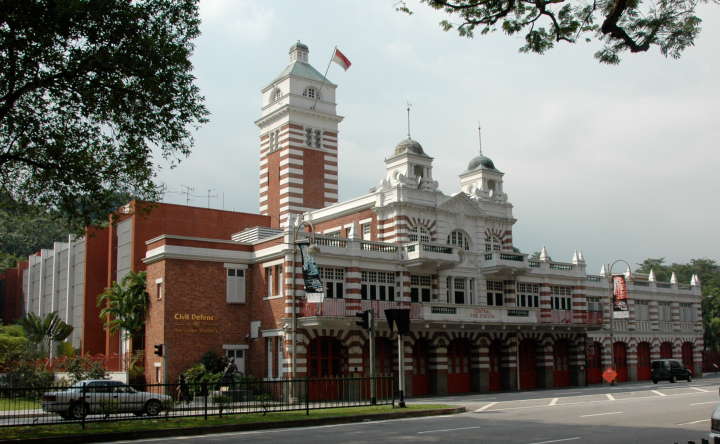
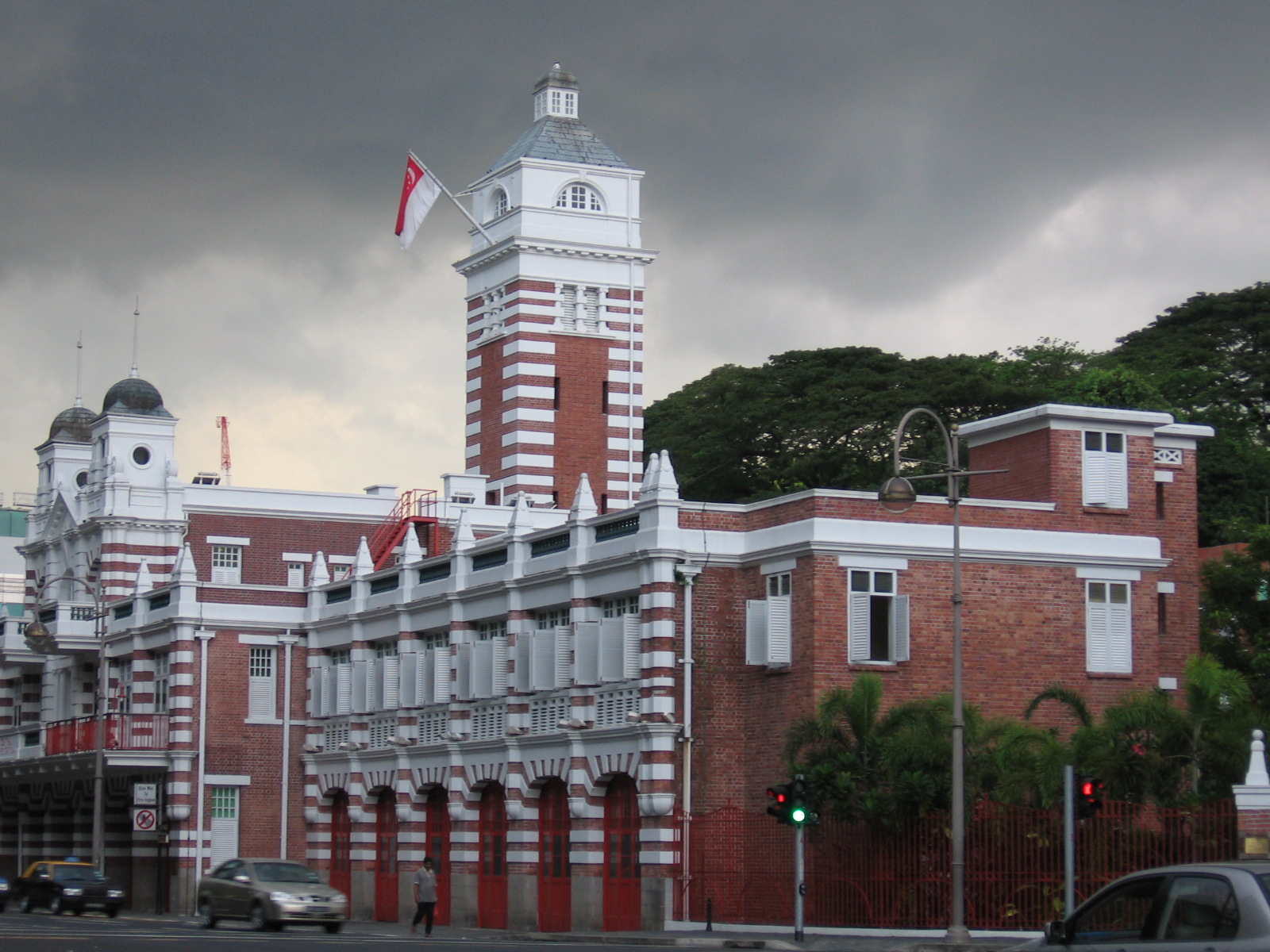
The Central Fire Station (Chinese: 中央消防局) is the oldest existing fire station in Singapore, and is located at Hill Street in the Museum Planning Area, within the Central Area, Singapore’s central business district.The Central Fire Station, also known as the Hill Street Fire Station, is Singapore’s oldest surviving fire station. Completed in 1909, the distinctive red-and-white brick building was gazetted as a national monument by the Preservation of Monuments Board on 18 December 1998. Still an active station, it also houses the Civil Defence Heritage Gallery, which showcases the firefighting history of Singapore. The gallery was opened to the public in 20. The red and white Central Fire Station, completed in 1908 (and still in use), has a watchtower and living quarters for firemen. On Saturday mornings kids can ride on an engine and take pictures with the Red Rhinos (a smaller version of the fire truck) and the firemen. Then head next door to the Civil Defence Heritage Gallery (open 10am-5pm Tue-Sun), a mini fire-fighting museum housing old trucks and equipment, plus interactive games and activities on the second level.
Central Fire Station

Central Fire Station

HistoryEdit

The idea for a professional Fire Brigade was conceived after a fire in Kling Street destroyed S$13,000 worth of property on 7 November 1855. It was 14 years before a volunteer fire service was started and a further 36 years before Singapore’s first proper fire station — Central Fire Station — was built. In 1905, planning for Central Fire Station began under the supervision of the Fire Brigade superintendent, Montague Pett. The station was completed in 1908. Built at a cost of S$64,000, it included a watch tower and living quarters for firemen.Central Fire Station had four portable water pumps. Nonetheless, even this basic setting was a huge improvement over what existed before. Superintendent Pett fought for improved working conditions and initiated fire safety measures in public buildings. Standards of operations rose to a professional level and the degree of fire-related damage fell significantly.The handing over of the fire service to Pett and the setting up of Central Fire Station was a welcome and much needed change. From that time, the Fire Brigade has consistently grown and improved. It became so invaluable that during the Japanese Occupation, the Japanese retained British firemen in their jobs, who were thus spared incarceration.The Central Fire Station was gazetted as a national monument on 18 December 1998.

Must SeeEdit

Must see

Visiting TimeEdit

10am-5pm

Closed OnEdit

Monday

Best Season to VisitEdit

June to July and November to December.

Best Time To VisitEdit

N.A.

Time Required for SightseeingEdit

N.A.

Ticket Required : No Edit

Individual National Adult  : N.A.

Kids : N.A.

Individual Foreigner Adult  : N.A.

Kids : N.A.

Still Photo Camera : N.A.

Video Camera  : N.A.

Guide Required : No Edit

Approximate cost: N.A.

Dress Code (If Any) : No Edit

Dress Require: N.A.

Restaurants NearbyAdd / Edit

  • Spruce ;  320 Tanglin Rd Singapore 247980 ; Ph/M –  65 6836 5528 ; Food Serve –  Restaurant or Cafe, Dessert Shop:-brunch · mac & cheese · tuna tartar · eggs benedict · the pancakes.

How to ReachEdit

Taxi : Taxis are generally very hard to get during peak hours (Mon-Fri 7:00am – 9:30am and Mon-Sat 5:00pm – 8:00pm) and on rainy days. If you are at a hotel, have conceirge call you a taxi. If you are out about town and have access to a cell phone- calling for a taxi will cut your wait time by 20 to 30 minutes. All taxis are fitted with meters; all are air conditioned; the majority of the taxis are 5-seaters; about 90% of taxis have radiophones; call booking is done via GPS or digital voice dispatch. All passengers must fasten their seat belts by law.
For taxi Booking fee is SGD $2.3. Minimum fare for taxi is SGD $3 for first 1Km. Fare above minimum fare until 10Km is SGD $0.55 per Km. Fare above 10Km is charge SGD $0.628 per Km. Taxi Waiting charges per hour is SGD $17.6. Peak Hours charges is diffrent.

Bus : Public buses run daily from 5.30am to midnight. Extended night services cost slightly more (a flat rate ranging from $1.50-$3.00). Otherwise, most fares depend on distance travelled and range from 67 cents to $1.58 for air-conditioned comfort (almost all public buses in Singapore have air-conditioning today). There are also “feeder” bus services that charge a flat rate of 67 cents. Each bus should not take more than 15 to 20 minutes to arrive at the bus stop.

Train : Singapore MRT system is very well connected to different parts of Singapore and very clean! If you have the time and plan to explore around little Sunny island, get the the Singapore Tourist Pass!
It runs 6am-12mn, fares start at S$1 (70cents in EZ link). Tickets can be purchased in all MRT stations. You just have to insert your money through the ticket machine. Rush hour’s usually 7am-9am, 11am-2pm and 4pm-7pm.

Air : Changi Airport is the country’s main airport. From the airport there are a number of ways to get into the city:
Taxi is easiest – simply follow the signs after clearing customs. Meters are always used in Singapore and prices are reasonable. A trip to the city during the day will be between $20-$30 including $3-5 airport surcharge. An additional 50% surcharge applies between midnight and 06:00.
Limousines charge a flat $50 to anywhere in the city and are a pretty good deal after midnight, as you can skip the queue and avoid the surcharge. The same pricing applies to chartering van-sized MaxiCabs, which are good for large families or if you have lots of baggage.
Shuttle – Shared six-seater MaxiCab shuttle service to designated areas/hotels costs $7 and can be booked in advance or in the arrivals hall. 6AM-2AM, every 15-30 min.
Subway – MRT trains run from a station between T2 and T3, but you’ll need to change trains at Tanah Merah to a city-bound train: just exit through the left hand side door and cross the platform. The 30 min ride to City Hall station costs $1.90 plus a refundable $1 deposit, and trains run 05:31-23:18.
Bus – Bus terminals can be found in the basements of T1, T2 and T3. 06:00-23:59 only. Fares are less than $2.00, exact fare required (no change given) if you pay cash.

Others : N.A.

Things to CarryEdit

Safety / WarningEdit

  • Please be advised that all bags and personal items are subject to inspection.

HelplineEdit

  • Police: 999
  • Emergencies/Ambulance/Fire Brigade: 999
  • Police Hotline: 1800 353 0000
  • Non-emergency ambulance: 1777
  • Flight Information (24-hours): 1800-542 4422
  • Tourism Information (24-hours): 1800-736 2000
Gallery

View All Sight of Singapore… Click Here

Merlion Park & Statue

Sentosa Island

Esplanade Theatres

Central Business District

Singapore /Singapore /Singapore

Sight Address : Shenton Way, Singapore, Singapore (Downtown Core).Edit

Detail InformationEdit

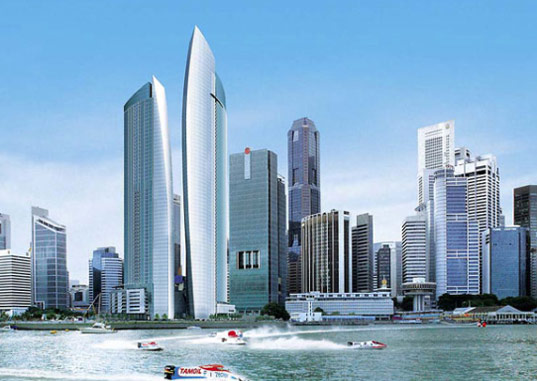
Central Business District (CBD), located to the immediate south of Singapore River, is the core financial and commercial hub. This is where most of Singapore’s urban planning areas are concentrated, which include the Downtown Core, Marina East, Marina South, Museum, Newton River Valley, Orchard, Rochor and Outram, just to name a few. In Singapore, the Central Area or Central Business District (CBD) contains the core financial and commercial districts, including eleven urban planning areas, namely Downtown Core, Marina East, Marina South, Museum, Newton, Orchard, Outram, River Valley, Rochor, Singapore River and Straits View as defined by the Urban Redevelopment Authority (URA). Part of the Central Region in the southern part of Singapore, it includes high value land intensely regulated by the URA’s urban planning initiatives. It approximately equates to the area which may be referred to as the city despite Singapore being a city in itself.Singapore River which currently empties into Marina Bay by the Merlion, is a major landmark in this Central Area. The river originally emptied into the Singapore Straits, the main maritime activity site for the colony. The commercial areas which developed on the south banks became the central business district for post-independence Singapore (also known as Golden Shoe). URA groups these areas of commercial activity and calls it the Central Area.The Central Area has since been expanded by the Government of Singapore and the URA to include the land reclamation of Marina Bay. Many construction projects have been completed on these reclaimed lands with many more still under consolidation or development.

Central Business District

Central Business District

HistoryEdit

Much of the central area bounded by Telok Ayer Road, which has a high concentration of skyscrapers is built on reclaimed land.Therefore the Thian Hock Keng Temple built in 1839 along Telok Ayer Road used to face the sea and it was visited by Chinese immigrants giving thanks to Ma Zu (Goddess of the Sea) for their safe voyage. Prior to 1839, the temple served as a joss-house for the Hokkien immigrants. This temple, which is also the first Hokkien temple to be built by the Hokkien clan under the leadership of Tan Tock Seng and Si Hoo Keh, is in the architectural style of southern China, using only materials imported from China and supported with no nails. The clan’s office was housed there and this temple was also used as a meeting venue. The construction of the temple was completed in 1842 and details of this temple’s history are recorded in granite tablets found on the wall inside the Entrance Hall.A plaque inscribed with the words Bo Jing Nan Ming (Gentle Waves over the South Seas) which was presented by the Guangxu Emperor in 1907, is found in this temple providing evidence of the temple’s stature. The temple comprises an architectural masterpiece of stone, tiles and wood, dragons and phoenixes, amazing cravings, sculptures and imposing columns.The Thian Hock Keng temple has been gazetted as a national monument in 1973.The adjacent placement of places of worship of various religions (such as the Thian Hock Keng Temple, Nagore Durgha, Singapore, the Central Christian Church and Al Abrar Mosque) and demonstrate the peaceful coexistence of the early multi-ethnic and multi-cultural communities in Singapore.Also, over at Church Street, there is the Yueh Hai Ching Temple. The Temple is one of the oldest Taoist temple and it was built in 1826. his temple was established by a group of Teochew settlers from Guangzhou in China when they dedicated a shrine to Tian Hou. This temple faced the sea and was therefore a place where newly-arrived Chinese immigrants (sailors and travellers included) came to offer their thanks to the Goddess for their safe voyage across the seas. The renovation to the temple was undertaken by the Ngee Ann Kongsi, which was formed by a group of immigrants from the Teochew community.This temple served as a meeting place for the people of the Teochew community in the late 19th century when the Teochews became the second largest Chinese Dialect group in Singapore.The temple was honoured with a bian e, an imperial signboard from Emperor Guang Xu of the Qing Dynasty in 1907. In 1996 it was gazetted as a national monument and it underwent repairs and restoration works. This temple is a silent testimony to the faith and gratitude of many people in Singapore. The background contrast between the old temples and the new modern buildings indicate that new and old can surely bond and blend in one common space.The temple has a cover structure which are models depicting the lives of Chinese villagers. The emperor of China at that point in time also presented the temple with a signboard that is still displayed in the temple till today. The temple is separated into two sections; each section caters for the different people coming from the different parts of China.

Must SeeEdit

Popular

Visiting TimeEdit

N.A.

Closed OnEdit

N.A.

Best Season to VisitEdit

June to July and November to December.

Best Time To VisitEdit

N.A.

Time Required for SightseeingEdit

N.A.

Ticket Required : No Edit

Individual National Adult  : N.A.

Kids : N.A.

Individual Foreigner Adult  : N.A.

Kids : N.A.

Still Photo Camera : N.A.

Video Camera  : N.A.

Guide Required : No Edit

Approximate cost: N.A.

Dress Code (If Any) : No Edit

Dress Require: N.A.

Restaurants NearbyAdd / Edit

How to ReachEdit

Taxi : Taxis are generally very hard to get during peak hours (Mon-Fri 7:00am – 9:30am and Mon-Sat 5:00pm – 8:00pm) and on rainy days. If you are at a hotel, have conceirge call you a taxi. If you are out about town and have access to a cell phone- calling for a taxi will cut your wait time by 20 to 30 minutes. All taxis are fitted with meters; all are air conditioned; the majority of the taxis are 5-seaters; about 90% of taxis have radiophones; call booking is done via GPS or digital voice dispatch. All passengers must fasten their seat belts by law.
For taxi Booking fee is SGD $2.3. Minimum fare for taxi is SGD $3 for first 1Km. Fare above minimum fare until 10Km is SGD $0.55 per Km. Fare above 10Km is charge SGD $0.628 per Km. Taxi Waiting charges per hour is SGD $17.6. Peak Hours charges is diffrent.

Bus : Public buses run daily from 5.30am to midnight. Extended night services cost slightly more (a flat rate ranging from $1.50-$3.00). Otherwise, most fares depend on distance travelled and range from 67 cents to $1.58 for air-conditioned comfort (almost all public buses in Singapore have air-conditioning today). There are also “feeder” bus services that charge a flat rate of 67 cents. Each bus should not take more than 15 to 20 minutes to arrive at the bus stop.

Train : Singapore MRT system is very well connected to different parts of Singapore and very clean! If you have the time and plan to explore around little Sunny island, get the the Singapore Tourist Pass!
It runs 6am-12mn, fares start at S$1 (70cents in EZ link). Tickets can be purchased in all MRT stations. You just have to insert your money through the ticket machine. Rush hour’s usually 7am-9am, 11am-2pm and 4pm-7pm.

Air : Changi Airport is the country’s main airport. From the airport there are a number of ways to get into the city:
Taxi is easiest – simply follow the signs after clearing customs. Meters are always used in Singapore and prices are reasonable. A trip to the city during the day will be between $20-$30 including $3-5 airport surcharge. An additional 50% surcharge applies between midnight and 06:00.
Limousines charge a flat $50 to anywhere in the city and are a pretty good deal after midnight, as you can skip the queue and avoid the surcharge. The same pricing applies to chartering van-sized MaxiCabs, which are good for large families or if you have lots of baggage.
Shuttle – Shared six-seater MaxiCab shuttle service to designated areas/hotels costs $7 and can be booked in advance or in the arrivals hall. 6AM-2AM, every 15-30 min.
Subway – MRT trains run from a station between T2 and T3, but you’ll need to change trains at Tanah Merah to a city-bound train: just exit through the left hand side door and cross the platform. The 30 min ride to City Hall station costs $1.90 plus a refundable $1 deposit, and trains run 05:31-23:18.
Bus – Bus terminals can be found in the basements of T1, T2 and T3. 06:00-23:59 only. Fares are less than $2.00, exact fare required (no change given) if you pay cash.

Others : N.A.

Things to CarryEdit

Safety / WarningEdit

  • Please be advised that all bags and personal items are subject to inspection.

HelplineEdit

  • Police: 999
  • Emergencies/Ambulance/Fire Brigade: 999
  • Police Hotline: 1800 353 0000
  • Non-emergency ambulance: 1777
  • Flight Information (24-hours): 1800-542 4422
  • Tourism Information (24-hours): 1800-736 2000
Gallery

View All Sight of Singapore… Click Here

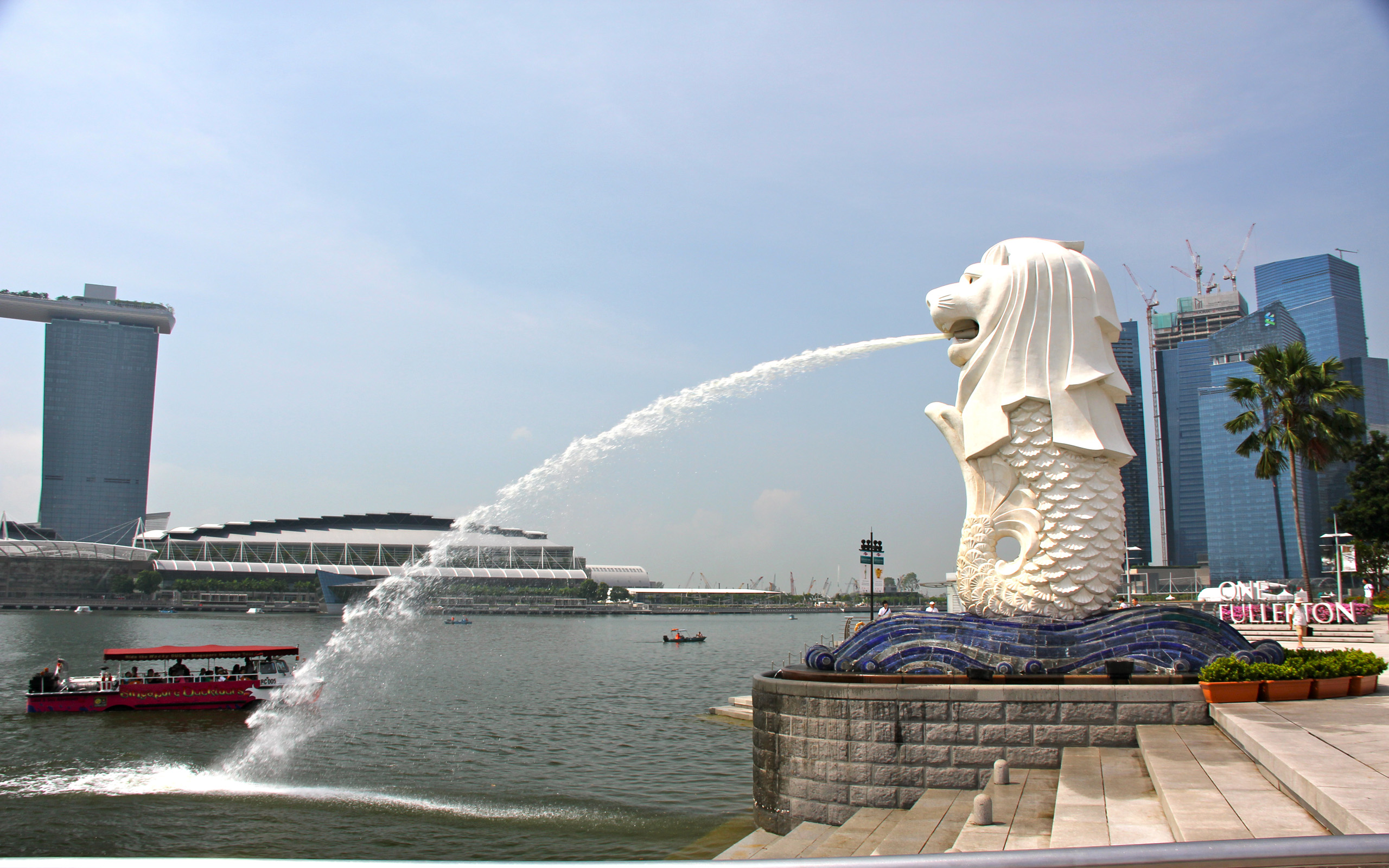
Merlion Park & Statue

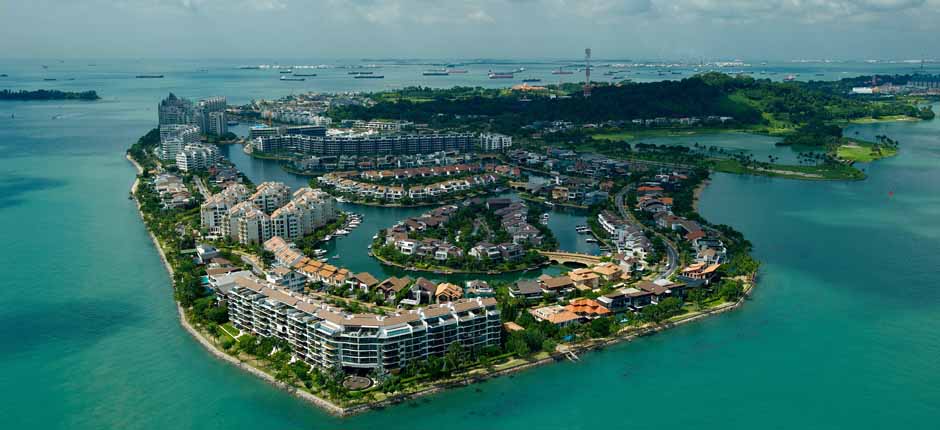
Sentosa Island

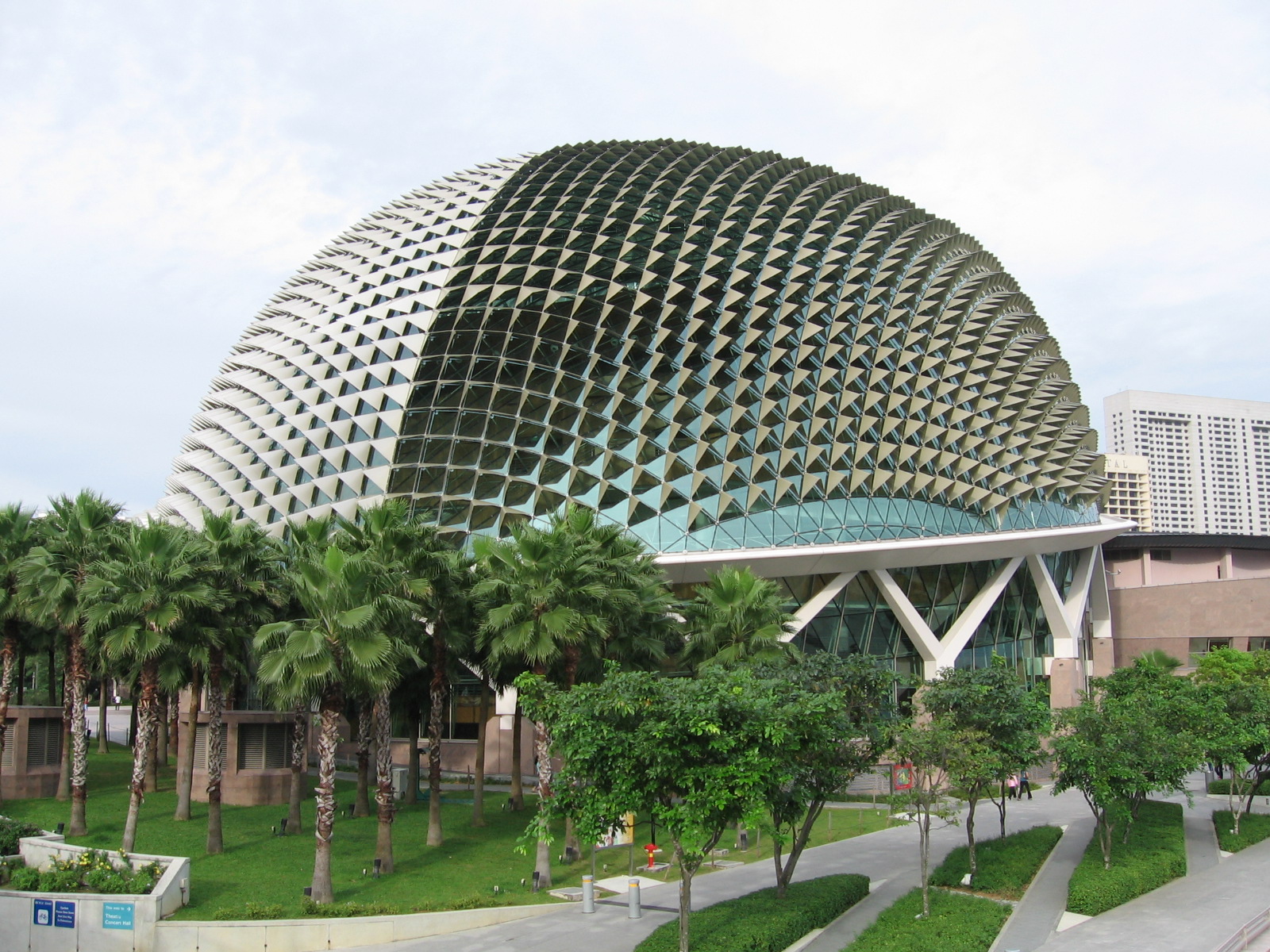
Esplanade Theatres

Cenotaph

Singapore /Singapore /Singapore

Sight Address : Esplanade Park, Singapore, Singapore (Downtown Core).Edit

Detail InformationEdit

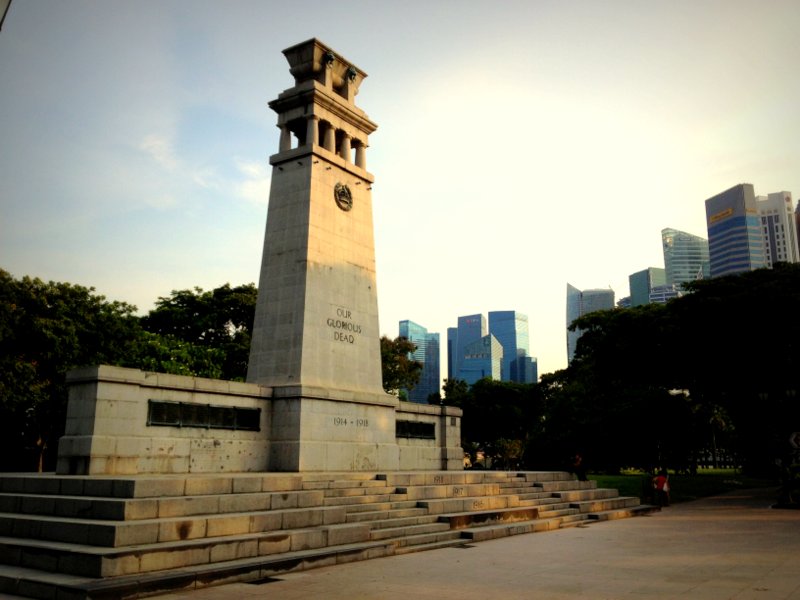
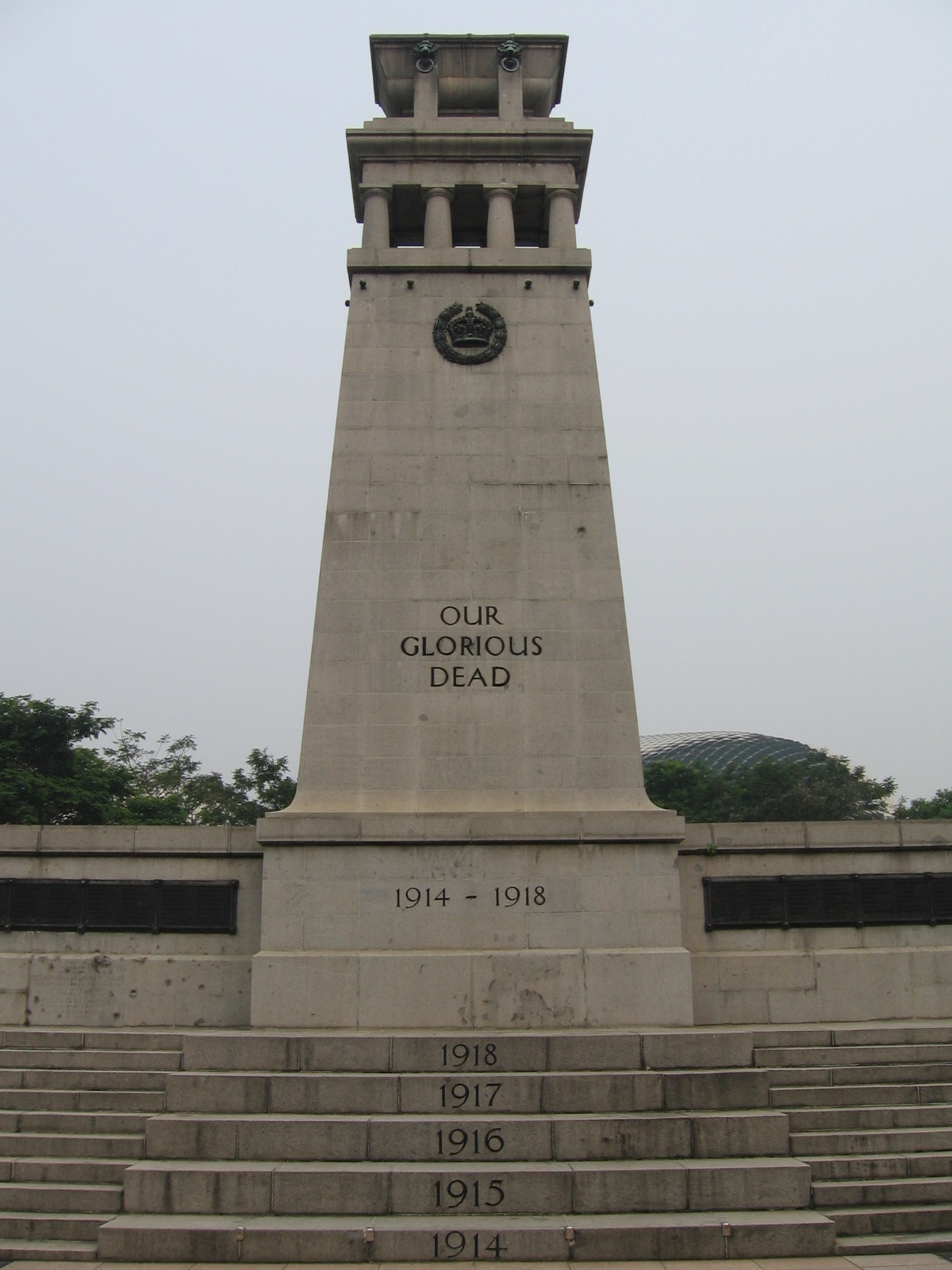
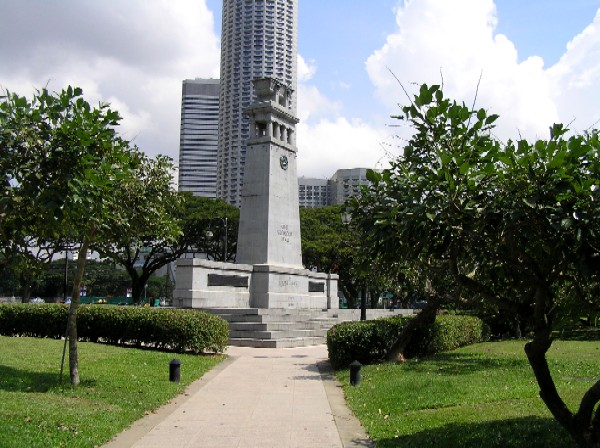
The Cenotaph (Chinese: 战亡纪念碑) is a war memorial located within the Esplanade Park at Connaught Drive, within the Central Area in Singapore’s central business district.The Cenotaph, located at Esplanade Park along Connaught Drive, is a war memorial which commemorates the sacrifice of the men who perished during World War I and World War II. It was unveiled on 31 March 1922 by the Prince of Wales. On 28 December 2010, it was gazetted as a national monument together with two other structures in Esplanade Park, the Lim Bo Seng Memorial and the Tan Kim Seng Fountain.The Cenotaph is made of local granite and is nearly 60ft high. Bronze tablets on the Cenotaph bear the names of the men who perished in World War I. The original five steps that lead up to the monument bear the dates 1914, 1915, 1916, 1917 and 1918, marking the war years. Crowning the structure is a sarcophagus with a bronze lion beneath a bronze medallion consisting of a laurel wreath of victory enclosing a crown. It symbolises the crown to which these men had rallied and is also a reflection of the Crown Colony. Lower down is the inscription “The Glorious Dead” and below the inscription are the dates 1914-1918. On the reverse side, though no names are listed to commemorate the World War II casualties, the phrase “They died so we might live” is inscribed in the four official languages, English, Malay, Chinese and Tamil. The extended steps that were added in 1951 bear the war years 1939 to 1945 in succession. There are 14 pylons on both sides of the stone structure showing the names of famous battles, with each battle surmounted by a laurel wreath. Overall, it is a simple granite structure wrought with just a hammer and a chisel.

Cenotaph

Cenotaph

HistoryEdit

The Cenotaph was first erected as a memorial in honour of the 124 men from Singapore who died in action during World War I. It was designed by architect Denis Santry of Swan & Maclaren and was modelled after the Whitehall Cenotaph in London, England. The foundation stone was laid on 15 November 1920 by Sir Lawrence Nunns Guillemard, Governor of the Straits Settlements, in the presence of M. Georges Clemenceau, Premier of France, as well as Major-General Sir D.H. Ridout, the General Officer Commanding the Troops, Straits Settlements. The memorial was unveiled on 31 March 1922 in a solemn ceremony by the Prince of Wales (later Duke of Windsor and King Edward VIII) during his tour of Malaya, India, Australia and New Zealand.In 1950, the government approved an extension to the base of the structure to commemorate those who died during World War II. The extension was completed in 1951.The Cenotaph was built in memory of the 124 British soldiers born or resident in Singapore who gave their lives in World War I (1914–1918), with a second dedication (but no names) added in remembrance of those who died in World War II (1941–1945).The structure was designed by Denis Santry of Swan and Maclaren. The foundation stone was laid by Sir Lawrence Nunns Guillemard, the Governor of the Straits Settlements, on 15 November 1920. In attendance was the visiting French Premier, George Clemenceau who was the French Minister of War from 1917 to 1919.The memorial was completed in 1922, and was unveiled on 31 March that year by the young Prince Edward of Wales, later Duke of Windsor and King Edward VIII, during his Asia-Pacific tour. During the unveiling ceremony, a chaplain blessed the Cenotaph with the words, “The stone is well laid and truly laid to the Glory of God and the memory of the illustrious dead.” Against the backdrop of the sea then fronting Queen Elizabeth Walk, Governor Guillemard awarded medals of courage to those who had served in the war.In Prince Edward’s entourage was Louis Mountbatten. At the end of World War II, Mountbatten returned to Singapore as the Supreme Commander of the South East Asia Command to receive the surrender of the Japanese at City Hall on 12 September 1945.

Must SeeEdit

Attraction

Visiting TimeEdit

10 am -11 pm

Closed OnEdit

N.A.

Best Season to VisitEdit

June to July and November to December.

Best Time To VisitEdit

N.A.

Time Required for SightseeingEdit

N.A.

Ticket Required : No Edit

Individual National Adult  : N.A.

Kids : N.A.

Individual Foreigner Adult  : N.A.

Kids : N.A.

Still Photo Camera : N.A.

Video Camera  : N.A.

Guide Required : No Edit

Approximate cost: N.A.

Dress Code (If Any) : No Edit

Dress Require: N.A.

Restaurants NearbyAdd / Edit

How to ReachEdit

Taxi : Taxis are generally very hard to get during peak hours (Mon-Fri 7:00am – 9:30am and Mon-Sat 5:00pm – 8:00pm) and on rainy days. If you are at a hotel, have conceirge call you a taxi. If you are out about town and have access to a cell phone- calling for a taxi will cut your wait time by 20 to 30 minutes. All taxis are fitted with meters; all are air conditioned; the majority of the taxis are 5-seaters; about 90% of taxis have radiophones; call booking is done via GPS or digital voice dispatch. All passengers must fasten their seat belts by law.
For taxi Booking fee is SGD $2.3. Minimum fare for taxi is SGD $3 for first 1Km. Fare above minimum fare until 10Km is SGD $0.55 per Km. Fare above 10Km is charge SGD $0.628 per Km. Taxi Waiting charges per hour is SGD $17.6. Peak Hours charges is diffrent.

Bus : Public buses run daily from 5.30am to midnight. Extended night services cost slightly more (a flat rate ranging from $1.50-$3.00). Otherwise, most fares depend on distance travelled and range from 67 cents to $1.58 for air-conditioned comfort (almost all public buses in Singapore have air-conditioning today). There are also “feeder” bus services that charge a flat rate of 67 cents. Each bus should not take more than 15 to 20 minutes to arrive at the bus stop.

Train : Singapore MRT system is very well connected to different parts of Singapore and very clean! If you have the time and plan to explore around little Sunny island, get the the Singapore Tourist Pass!
It runs 6am-12mn, fares start at S$1 (70cents in EZ link). Tickets can be purchased in all MRT stations. You just have to insert your money through the ticket machine. Rush hour’s usually 7am-9am, 11am-2pm and 4pm-7pm.

Air : Changi Airport is the country’s main airport. From the airport there are a number of ways to get into the city:
Taxi is easiest – simply follow the signs after clearing customs. Meters are always used in Singapore and prices are reasonable. A trip to the city during the day will be between $20-$30 including $3-5 airport surcharge. An additional 50% surcharge applies between midnight and 06:00.
Limousines charge a flat $50 to anywhere in the city and are a pretty good deal after midnight, as you can skip the queue and avoid the surcharge. The same pricing applies to chartering van-sized MaxiCabs, which are good for large families or if you have lots of baggage.
Shuttle – Shared six-seater MaxiCab shuttle service to designated areas/hotels costs $7 and can be booked in advance or in the arrivals hall. 6AM-2AM, every 15-30 min.
Subway – MRT trains run from a station between T2 and T3, but you’ll need to change trains at Tanah Merah to a city-bound train: just exit through the left hand side door and cross the platform. The 30 min ride to City Hall station costs $1.90 plus a refundable $1 deposit, and trains run 05:31-23:18.
Bus – Bus terminals can be found in the basements of T1, T2 and T3. 06:00-23:59 only. Fares are less than $2.00, exact fare required (no change given) if you pay cash.

Others : N.A.

Things to CarryEdit

Safety / WarningEdit

  • Please be advised that all bags and personal items are subject to inspection.

HelplineEdit

  • Police: 999
  • Emergencies/Ambulance/Fire Brigade: 999
  • Police Hotline: 1800 353 0000
  • Non-emergency ambulance: 1777
  • Flight Information (24-hours): 1800-542 4422
  • Tourism Information (24-hours): 1800-736 2000
Gallery

View All Sight of Singapore… Click Here

Merlion Park & Statue

Sentosa Island

Esplanade Theatres

Cavenagh Bridge

Singapore /Singapore /Singapore

Sight Address : Connaught Dr,Cavenagh Bridge, Singapore.Edit

Detail InformationEdit

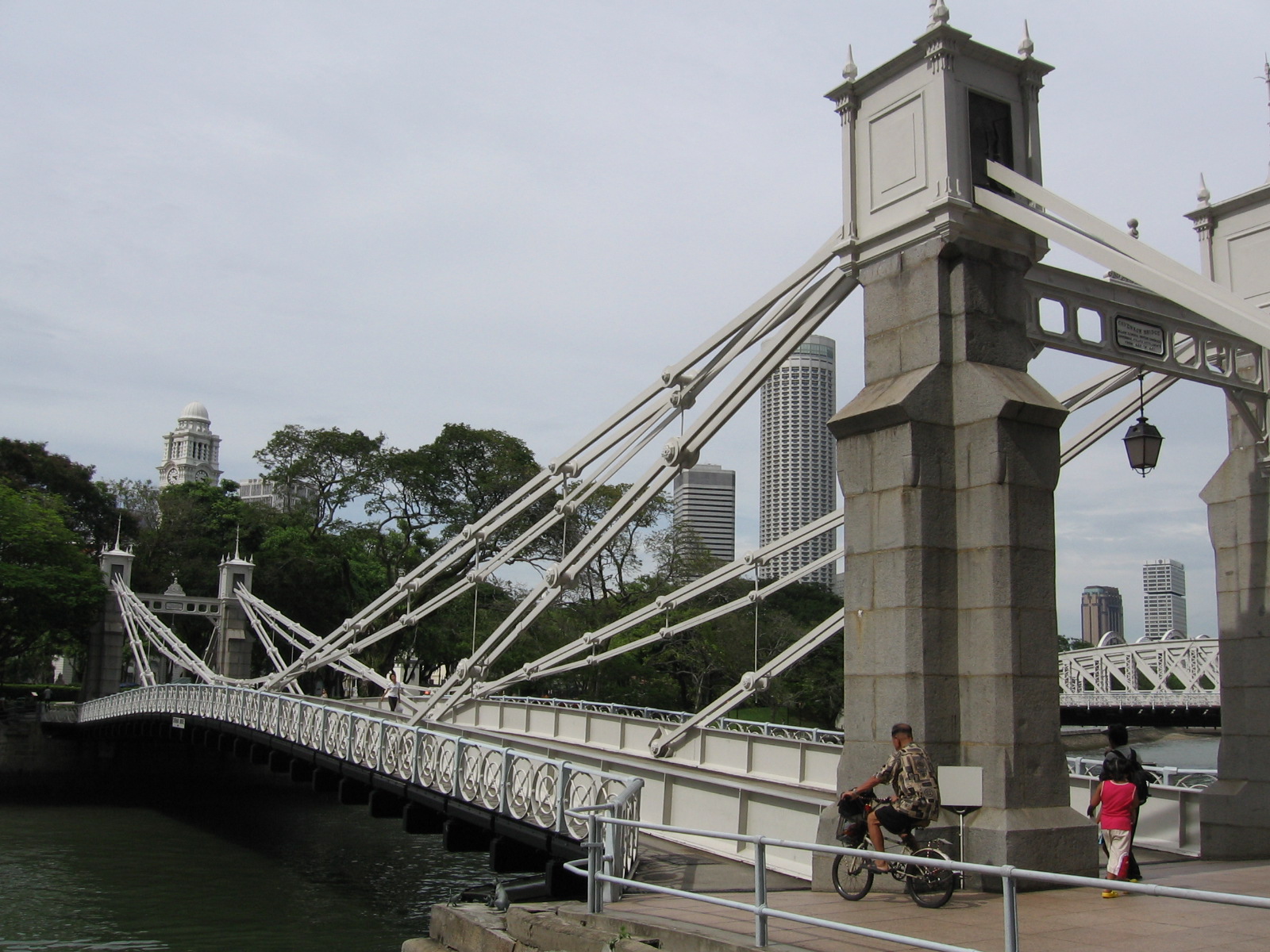
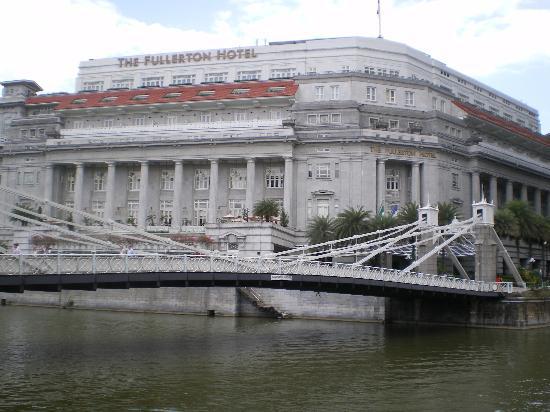
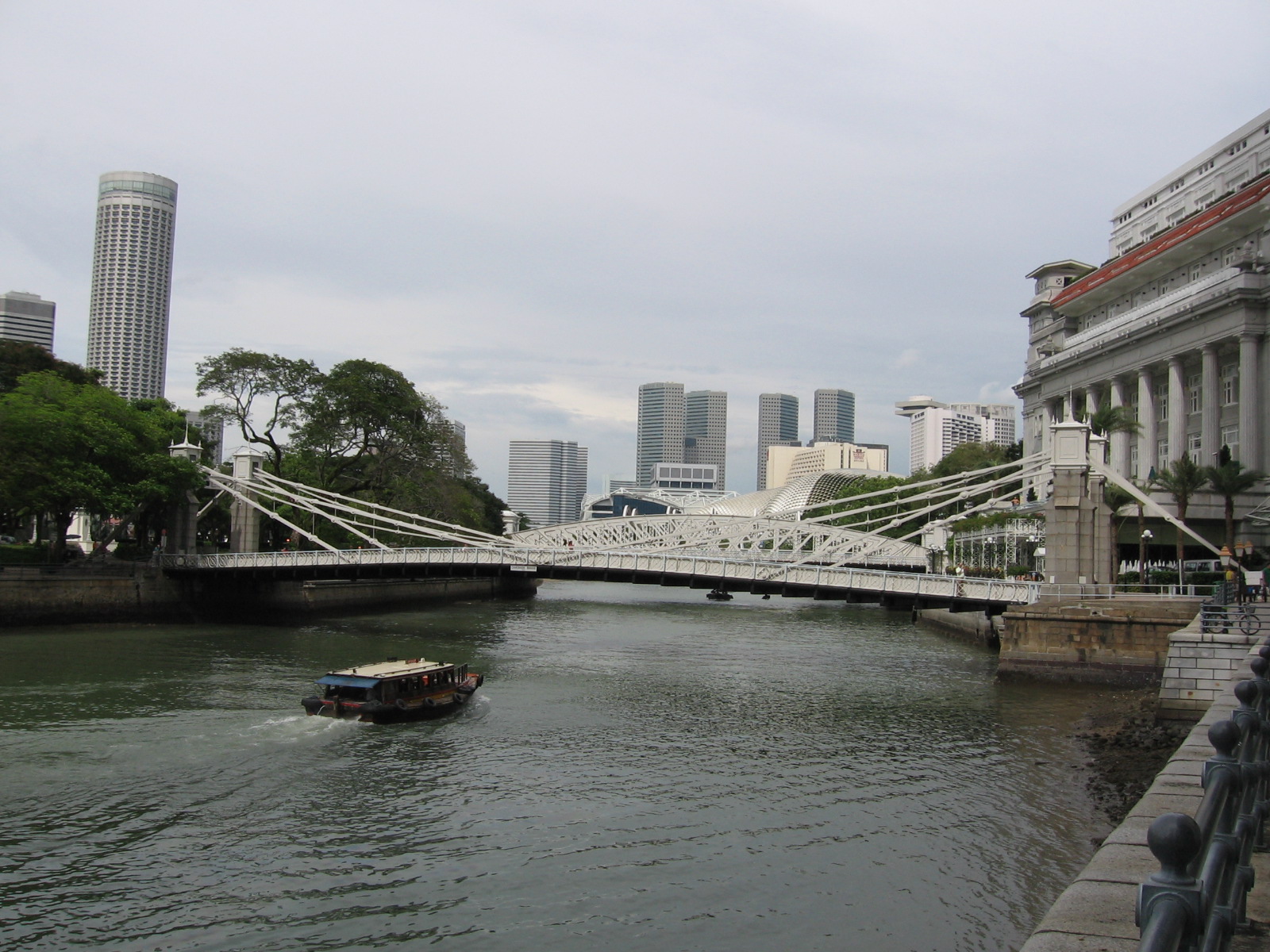
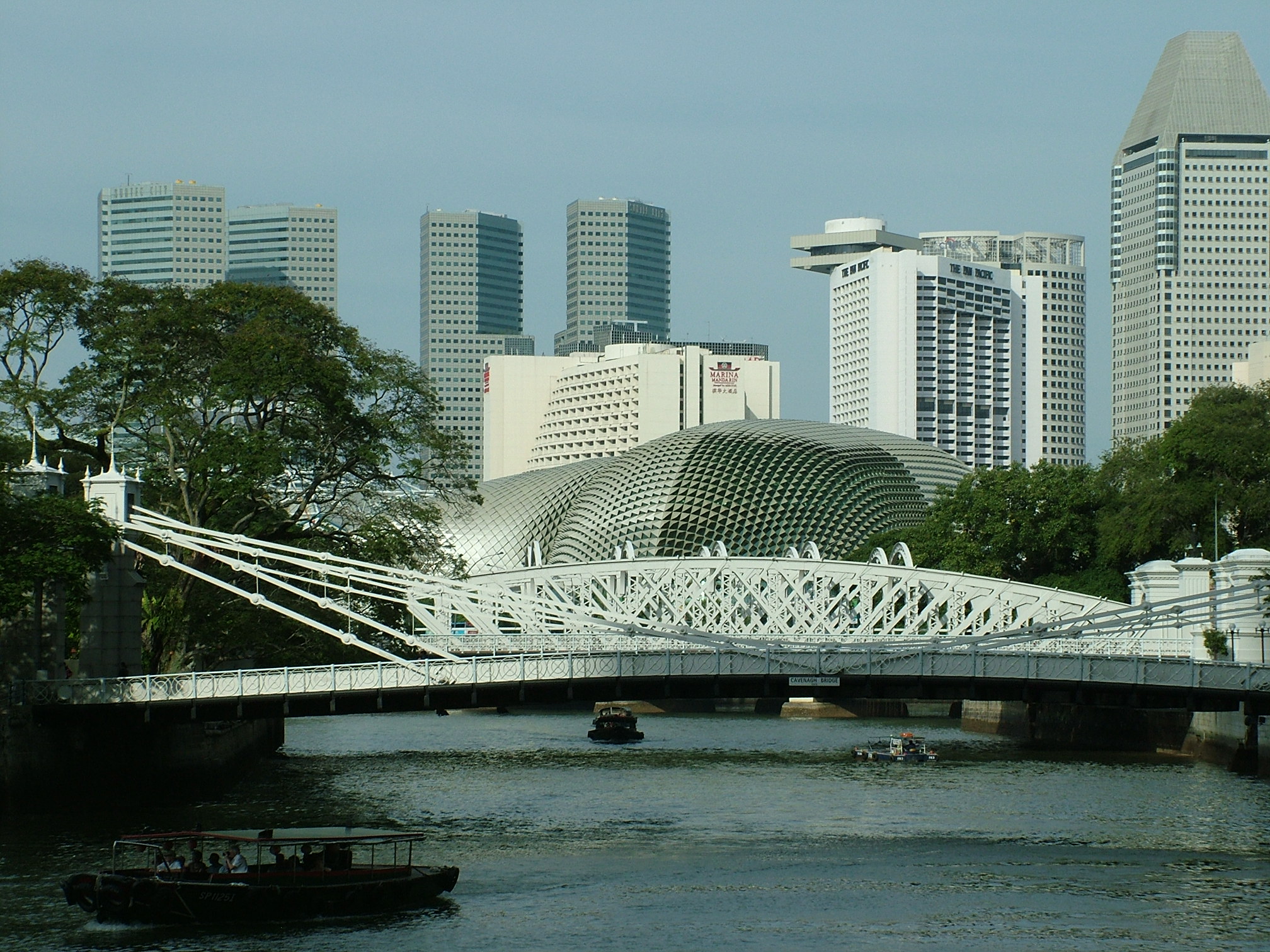
Cavenagh Bridge, a Singapore River crossing, located in Central Region. Named after Sir Lieutenant General William Orfeur Cavenagh, the last Governor of the Straits Settlements (1859 – 1867) under British India control. It was built in 1868 and is today the oldest bridge across the Singapore River. It was the last major work of the Indian convicts based in Singapore. Now it serves as a foot-bridge for pedestrian traffic only. Cavenagh Bridge was opened without ceremony. It was designed by Colonel G.C. Collyer, Chief Engineer of the Straits Settlements, with R.M. Ordish, of the Public Works Department, then under the charge of John Turnbull Thomson. Its steel structure was shipped out from Glasgow by P&W MacLellan, and constructed by these P&W MacLellan Engineers of Scotland of the Clutha Ironworks: the same company that had built the cast iron Telok Ayer Market. The Cavenagh family coat-of-arms can be seen on the cross-beams at both ends of the steel structure. The bridge linked Commercial Square (Raffles Place) and the government quarter, an essential alternative to get to the Post Office, replacing the ferry crossing which had cost a duit (“one cent”) per ride. Although Cavenagh Bridge had trams trundling across it, all heavy traffic was diverted to the Anderson Bridge when it was built in 1909. Cavenagh Bridge was declared off limits to ‘vehicles exceeding 3 cwts, cattle and horses’, then was converted into a pedestrian bridge. Unfortunately, the bridge had not been designed to make allowances for the tides and as late as 1983, the bumboats (tongkangs in Malay or twa-koh in Chinese) plowing the river had to wait for low tide before making their way under the bridge. In 1987, Cavenagh Bridge underwent a five-month refurbishment by the Public Works Department (PWD), to preserve and strengthen its structure. The restoration work cost a total of $1.2 million and the bridge was reopened on 3 July 1987. Today it is the oldest bridge across Singapore River.

Cavenagh Bridge

Cavenagh Bridge

HistoryEdit

In July 1856, there was a mere wooden foot-bridge where the Cavenagh Bridge now stands. In 1868, Cavenagh Bridge was built to commemorate the 50th Anniversary of the founding of the Crown Colony of the Straits Settlements held in 1869. It is named after Colonel Cavenagh, the last Governor of the Straits Settlements (1859 – 1867) under the Government of British India, although originally Governor Ord had planned for it to be named “Edinburgh Bridge” because it was first used during the visit of the Duke of Edinburgh to Singapore. Governor Ord eventually relented when members of the Singapore Legislative Council decided that it should honour and perpetuate the name of the last Governor appointed by the British East India Company to Singapore. Cavenagh Bridge was the last major project undertaken by Indian convict labour in 1869.Originally known as the Edinburgh Bridge to commemorate the visit of the Duke of Edinburgh, its name was changed to Cavenagh Bridge in honour of Major General William Orfeur Cavenagh, the last India-appointed Governor of the Straits Settlements, who governed from 1859 to 1867.The coat of arms of the Cavenagh family can still be seen atop the signage at both ends of the bridge.Cavenagh Bridge linked the Civic District on the northern bank to the Commercial District on the southern bank of the Singapore River. Before Cavenagh Bridge was constructed, people could only get to the two districts via a detour over Elgin Bridge or by paying 1 duit (¼ cent) for a boat ride across the river.

Must SeeEdit

Popular

Visiting TimeEdit

Open 24 hrs

Closed OnEdit

N.A.

Best Season to VisitEdit

June to July and November to December.

Best Time To VisitEdit

N.A.

Time Required for SightseeingEdit

N.A.

Ticket Required : No Edit

Individual National Adult  : N.A.

Kids : N.A.

Individual Foreigner Adult  : N.A.

Kids : N.A.

Still Photo Camera : N.A.

Video Camera  : N.A.

Guide Required : No Edit

Approximate cost: N.A.

Dress Code (If Any) : No Edit

Dress Require: N.A.

Restaurants NearbyAdd / Edit

  • Maharajah Boat Quay ;  41 Boat Quay Singapore 049830 ; Ph/M –  65 6535 0122 ; Food Serve –  Indian Restaurant.

How to ReachEdit

Taxi : Taxis are generally very hard to get during peak hours (Mon-Fri 7:00am – 9:30am and Mon-Sat 5:00pm – 8:00pm) and on rainy days. If you are at a hotel, have conceirge call you a taxi. If you are out about town and have access to a cell phone- calling for a taxi will cut your wait time by 20 to 30 minutes. All taxis are fitted with meters; all are air conditioned; the majority of the taxis are 5-seaters; about 90% of taxis have radiophones; call booking is done via GPS or digital voice dispatch. All passengers must fasten their seat belts by law.
For taxi Booking fee is SGD $2.3. Minimum fare for taxi is SGD $3 for first 1Km. Fare above minimum fare until 10Km is SGD $0.55 per Km. Fare above 10Km is charge SGD $0.628 per Km. Taxi Waiting charges per hour is SGD $17.6. Peak Hours charges is diffrent.

Bus : Public buses run daily from 5.30am to midnight. Extended night services cost slightly more (a flat rate ranging from $1.50-$3.00). Otherwise, most fares depend on distance travelled and range from 67 cents to $1.58 for air-conditioned comfort (almost all public buses in Singapore have air-conditioning today). There are also “feeder” bus services that charge a flat rate of 67 cents. Each bus should not take more than 15 to 20 minutes to arrive at the bus stop.

Train : Singapore MRT system is very well connected to different parts of Singapore and very clean! If you have the time and plan to explore around little Sunny island, get the the Singapore Tourist Pass!
It runs 6am-12mn, fares start at S$1 (70cents in EZ link). Tickets can be purchased in all MRT stations. You just have to insert your money through the ticket machine. Rush hour’s usually 7am-9am, 11am-2pm and 4pm-7pm.

Air : Changi Airport is the country’s main airport. From the airport there are a number of ways to get into the city:
Taxi is easiest – simply follow the signs after clearing customs. Meters are always used in Singapore and prices are reasonable. A trip to the city during the day will be between $20-$30 including $3-5 airport surcharge. An additional 50% surcharge applies between midnight and 06:00.
Limousines charge a flat $50 to anywhere in the city and are a pretty good deal after midnight, as you can skip the queue and avoid the surcharge. The same pricing applies to chartering van-sized MaxiCabs, which are good for large families or if you have lots of baggage.
Shuttle – Shared six-seater MaxiCab shuttle service to designated areas/hotels costs $7 and can be booked in advance or in the arrivals hall. 6AM-2AM, every 15-30 min.
Subway – MRT trains run from a station between T2 and T3, but you’ll need to change trains at Tanah Merah to a city-bound train: just exit through the left hand side door and cross the platform. The 30 min ride to City Hall station costs $1.90 plus a refundable $1 deposit, and trains run 05:31-23:18.
Bus – Bus terminals can be found in the basements of T1, T2 and T3. 06:00-23:59 only. Fares are less than $2.00, exact fare required (no change given) if you pay cash.

Others : N.A.

Things to CarryEdit

Safety / WarningEdit

  • Please be advised that all bags and personal items are subject to inspection.

HelplineEdit

  • Police: 999
  • Emergencies/Ambulance/Fire Brigade: 999
  • Police Hotline: 1800 353 0000
  • Non-emergency ambulance: 1777
  • Flight Information (24-hours): 1800-542 4422
  • Tourism Information (24-hours): 1800-736 2000
Gallery

View All Sight of Singapore… Click Here

Merlion Park & Statue

Sentosa Island

Esplanade Theatres

Cathedral of the Good Shepherd

Singapore /Singapore /Singapore

Sight Address : 4 Queen St, Singapore, Singapore (Downtown Core).Edit

Detail InformationEdit

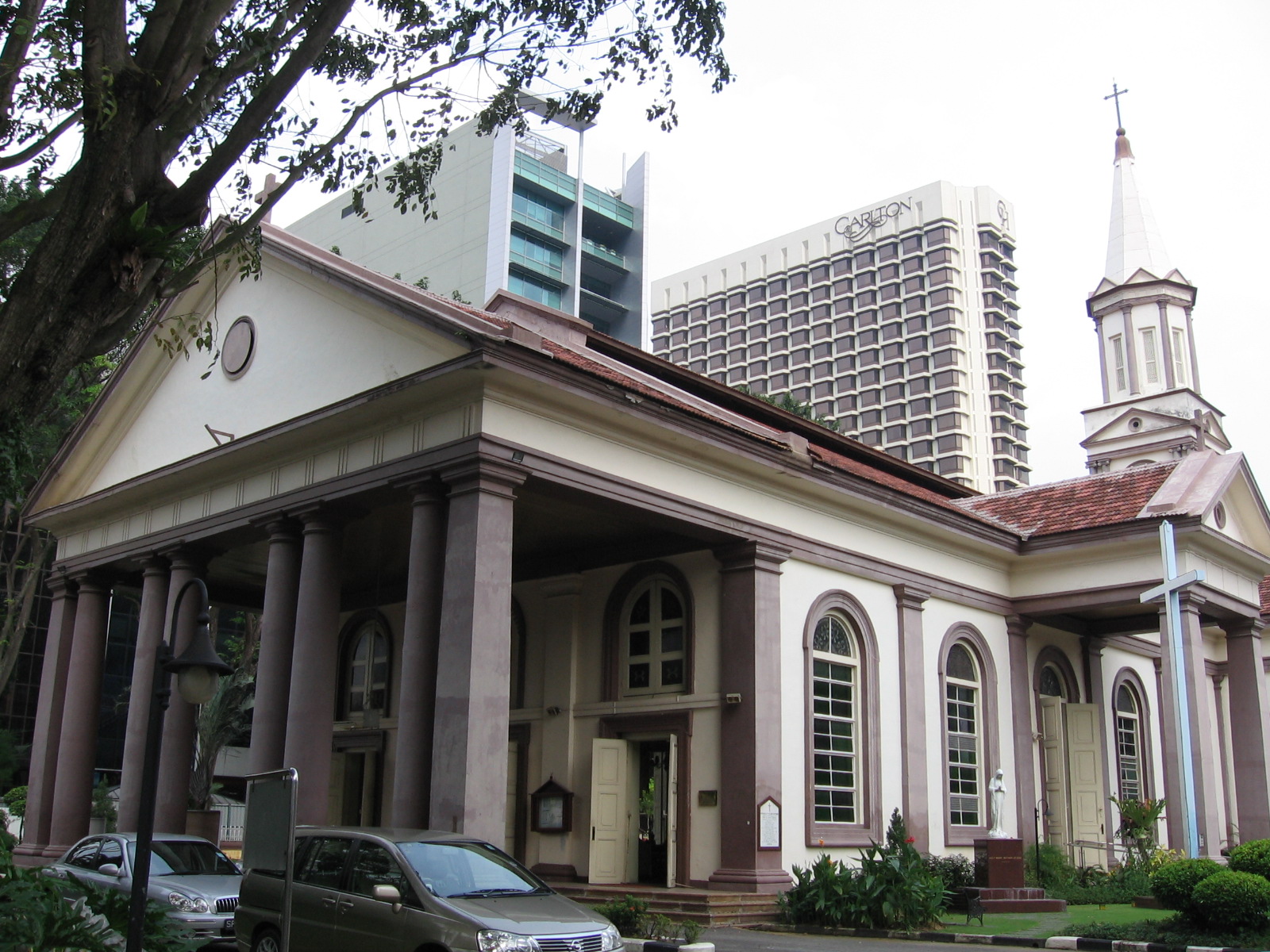
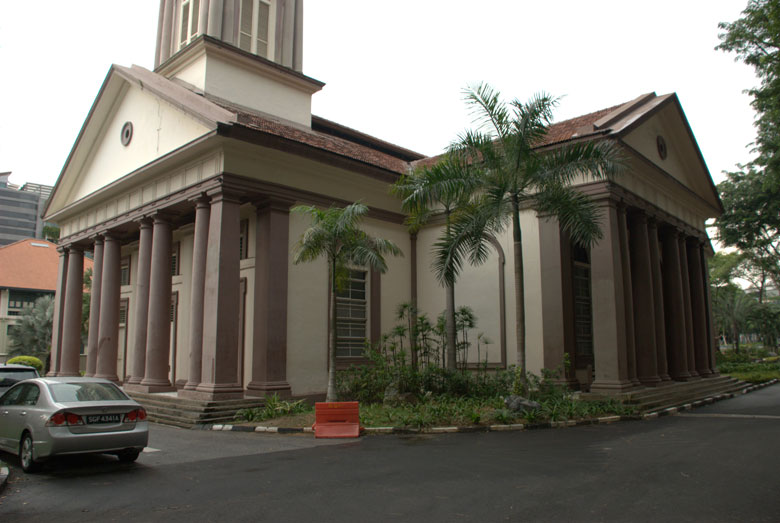
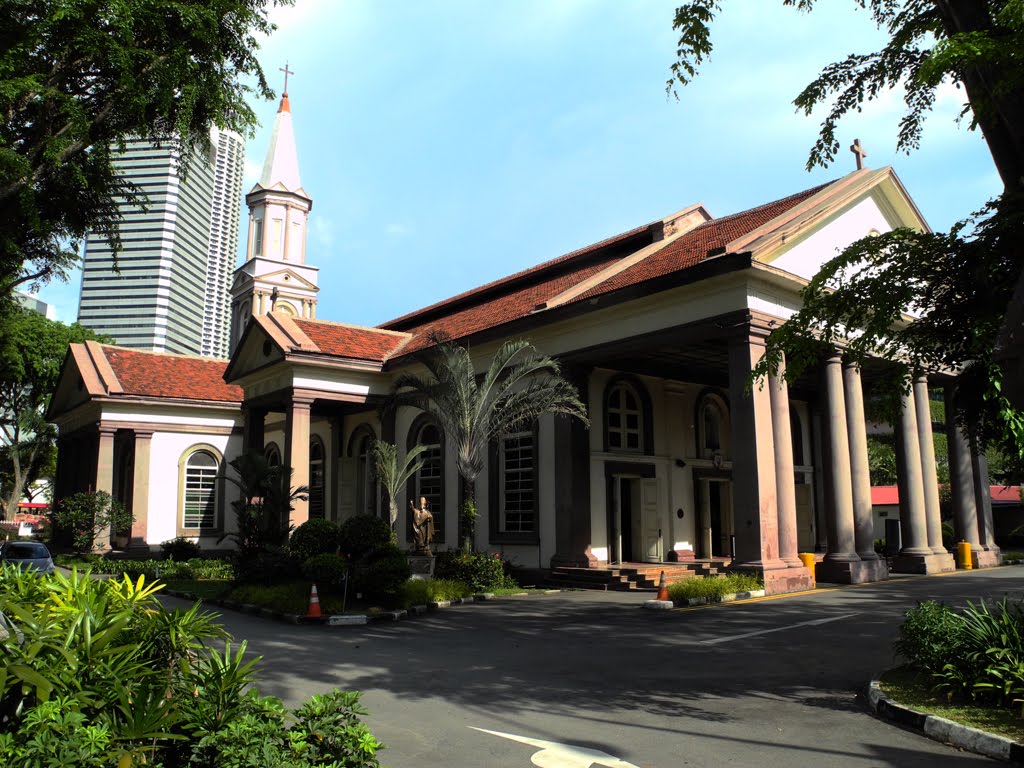
The Cathedral of the Good Shepherd (Chinese: 善牧主教座堂) is the oldest Roman Catholic church in Singapore. It is located in the Museum Planning Area within the Civic District and affords a welcome respite from the city.Bounded by the parallel Queen and Victoria Streets, and Bras Basah Road, the Cathedral sits within well-shaded grounds. Much of its architecture is reminiscent of two famous London churches namely St Paul’s, Covent Garden and St Martin-in-the-Fields.The Cathedral of the Good Shepherd is the cathedral church of the Roman Catholic Archdiocese of Singapore and the seat of its archbishop. It is the final resting place of Bishop Edouard Gasnier, the first bishop of the revived Diocese of Malacca and aptly houses the relics of Saint Laurent-Marie-Joseph Imbert, to whom the Cathedral owes its name.

Cathedral of the Good Shepherd

Cathedral of the Good Shepherd

HistoryEdit

In the beginning, the Roman Catholic community in Singapore attended Mass at the house of Denis Lesley McSwiney.In 1832, construction began on the first permanent Roman Catholic house of worship in Singapore. Financed through public subscriptions, the chapel, completed by 1833, was a small wood and attap structure measuring feet long by thirty feet wide that had cost about 700 Spanish dollars to build. The chapel, with neither tower nor spire, was on the site of the former Saint Joseph’s Institution building, now occupied by the Singapore Art Museum, and allotted by the Resident Councillor, George Bonham to Father Jean-Baptiste Boucho, a French missionary who had come from Penang. It was located in European Town, an area marked out in Sir Stamford Raffles’ 1822 town plan as a residential area for Europeans, Eurasians and wealthy Asians.

Must SeeEdit

Must see

Visiting TimeEdit

7 am to 6 pm

Closed OnEdit

N.A.

Best Season to VisitEdit

June to July and November to December.

Best Time To VisitEdit

N.A.

Time Required for SightseeingEdit

N.A.

Ticket Required : No Edit

Individual National Adult  : N.A.

Kids : N.A.

Individual Foreigner Adult  : N.A.

Kids : N.A.

Still Photo Camera : N.A.

Video Camera  : N.A.

Guide Required : No Edit

Approximate cost: N.A.

Dress Code (If Any) : No Edit

Dress Require: N.A.

Restaurants NearbyAdd / Edit

How to ReachEdit

Taxi : Taxis are generally very hard to get during peak hours (Mon-Fri 7:00am – 9:30am and Mon-Sat 5:00pm – 8:00pm) and on rainy days. If you are at a hotel, have conceirge call you a taxi. If you are out about town and have access to a cell phone- calling for a taxi will cut your wait time by 20 to 30 minutes. All taxis are fitted with meters; all are air conditioned; the majority of the taxis are 5-seaters; about 90% of taxis have radiophones; call booking is done via GPS or digital voice dispatch. All passengers must fasten their seat belts by law.
For taxi Booking fee is SGD $2.3. Minimum fare for taxi is SGD $3 for first 1Km. Fare above minimum fare until 10Km is SGD $0.55 per Km. Fare above 10Km is charge SGD $0.628 per Km. Taxi Waiting charges per hour is SGD $17.6. Peak Hours charges is diffrent.

Bus : Public buses run daily from 5.30am to midnight. Extended night services cost slightly more (a flat rate ranging from $1.50-$3.00). Otherwise, most fares depend on distance travelled and range from 67 cents to $1.58 for air-conditioned comfort (almost all public buses in Singapore have air-conditioning today). There are also “feeder” bus services that charge a flat rate of 67 cents. Each bus should not take more than 15 to 20 minutes to arrive at the bus stop.

Train : Singapore MRT system is very well connected to different parts of Singapore and very clean! If you have the time and plan to explore around little Sunny island, get the the Singapore Tourist Pass!
It runs 6am-12mn, fares start at S$1 (70cents in EZ link). Tickets can be purchased in all MRT stations. You just have to insert your money through the ticket machine. Rush hour’s usually 7am-9am, 11am-2pm and 4pm-7pm.

Air : Changi Airport is the country’s main airport. From the airport there are a number of ways to get into the city:
Taxi is easiest – simply follow the signs after clearing customs. Meters are always used in Singapore and prices are reasonable. A trip to the city during the day will be between $20-$30 including $3-5 airport surcharge. An additional 50% surcharge applies between midnight and 06:00.
Limousines charge a flat $50 to anywhere in the city and are a pretty good deal after midnight, as you can skip the queue and avoid the surcharge. The same pricing applies to chartering van-sized MaxiCabs, which are good for large families or if you have lots of baggage.
Shuttle – Shared six-seater MaxiCab shuttle service to designated areas/hotels costs $7 and can be booked in advance or in the arrivals hall. 6AM-2AM, every 15-30 min.
Subway – MRT trains run from a station between T2 and T3, but you’ll need to change trains at Tanah Merah to a city-bound train: just exit through the left hand side door and cross the platform. The 30 min ride to City Hall station costs $1.90 plus a refundable $1 deposit, and trains run 05:31-23:18.
Bus – Bus terminals can be found in the basements of T1, T2 and T3. 06:00-23:59 only. Fares are less than $2.00, exact fare required (no change given) if you pay cash.

Others : N.A.

Things to CarryEdit

Safety / WarningEdit

  • Please be advised that all bags and personal items are subject to inspection.

HelplineEdit

  • Police: 999
  • Emergencies/Ambulance/Fire Brigade: 999
  • Police Hotline: 1800 353 0000
  • Non-emergency ambulance: 1777
  • Flight Information (24-hours): 1800-542 4422
  • Tourism Information (24-hours): 1800-736 2000
Gallery

View All Sight of Singapore… Click Here

Merlion Park & Statue

Sentosa Island

Esplanade Theatres

Campbell Lane

Singapore /Singapore /Singapore

Sight Address : Near Clive St,Campbell Lane,singapore (Rochor).Edit

Detail InformationEdit

Campbell Lane (born 1939) is a Canadian actor who primarily does work in Vancouver. He has appeared in many television shows produced there, and has done some voice acting for anime as well.Campbell Lane is an actor who portrays the Cylon First Hybrid in “Razor” and the Razor Flashbacks. Lane also provided the voice of an alien species called the Bentusi in the 1999 computer game Homeworld, who, much like the Cylon Hybrid were fused with their ships and fond of cryptic, allusive speeches.

Campbell Lane

Campbell Lane

HistoryEdit

N.A.

Must SeeEdit

Attraction.

Visiting TimeEdit

9 am to 9 pm

Closed OnEdit

N.A.

Best Season to VisitEdit

June to July and November to December.

Best Time To VisitEdit

N.A.

Time Required for SightseeingEdit

N.A.

Ticket Required : No Edit

Individual National Adult  : N.A.

Kids : N.A.

Individual Foreigner Adult  : N.A.

Kids : N.A.

Still Photo Camera : N.A.

Video Camera  : N.A.

Guide Required : No Edit

Approximate cost: N.A.

Dress Code (If Any) : No Edit

Dress Require: N.A.

Restaurants NearbyAdd / Edit

  • Sky on 57 ;  10 Bayfront Ave Singapore 018956 ; Ph/M –  65 6688 8868 ; Food Serve –  Chinese Restaurant:-foie gras · justin quek · maine lobster · chef justin · xiao long bao

How to ReachEdit

Taxi : Taxis are generally very hard to get during peak hours (Mon-Fri 7:00am – 9:30am and Mon-Sat 5:00pm – 8:00pm) and on rainy days. If you are at a hotel, have conceirge call you a taxi. If you are out about town and have access to a cell phone- calling for a taxi will cut your wait time by 20 to 30 minutes. All taxis are fitted with meters; all are air conditioned; the majority of the taxis are 5-seaters; about 90% of taxis have radiophones; call booking is done via GPS or digital voice dispatch. All passengers must fasten their seat belts by law.
For taxi Booking fee is SGD $2.3. Minimum fare for taxi is SGD $3 for first 1Km. Fare above minimum fare until 10Km is SGD $0.55 per Km. Fare above 10Km is charge SGD $0.628 per Km. Taxi Waiting charges per hour is SGD $17.6. Peak Hours charges is diffrent.

Bus : Public buses run daily from 5.30am to midnight. Extended night services cost slightly more (a flat rate ranging from $1.50-$3.00). Otherwise, most fares depend on distance travelled and range from 67 cents to $1.58 for air-conditioned comfort (almost all public buses in Singapore have air-conditioning today). There are also “feeder” bus services that charge a flat rate of 67 cents. Each bus should not take more than 15 to 20 minutes to arrive at the bus stop.

Train : Singapore MRT system is very well connected to different parts of Singapore and very clean! If you have the time and plan to explore around little Sunny island, get the the Singapore Tourist Pass!
It runs 6am-12mn, fares start at S$1 (70cents in EZ link). Tickets can be purchased in all MRT stations. You just have to insert your money through the ticket machine. Rush hour’s usually 7am-9am, 11am-2pm and 4pm-7pm.

Air : Changi Airport is the country’s main airport. From the airport there are a number of ways to get into the city:
Taxi is easiest – simply follow the signs after clearing customs. Meters are always used in Singapore and prices are reasonable. A trip to the city during the day will be between $20-$30 including $3-5 airport surcharge. An additional 50% surcharge applies between midnight and 06:00.
Limousines charge a flat $50 to anywhere in the city and are a pretty good deal after midnight, as you can skip the queue and avoid the surcharge. The same pricing applies to chartering van-sized MaxiCabs, which are good for large families or if you have lots of baggage.
Shuttle – Shared six-seater MaxiCab shuttle service to designated areas/hotels costs $7 and can be booked in advance or in the arrivals hall. 6AM-2AM, every 15-30 min.
Subway – MRT trains run from a station between T2 and T3, but you’ll need to change trains at Tanah Merah to a city-bound train: just exit through the left hand side door and cross the platform. The 30 min ride to City Hall station costs $1.90 plus a refundable $1 deposit, and trains run 05:31-23:18.
Bus – Bus terminals can be found in the basements of T1, T2 and T3. 06:00-23:59 only. Fares are less than $2.00, exact fare required (no change given) if you pay cash.

Others : N.A.

Things to CarryEdit

Safety / WarningEdit

  • Please be advised that all bags and personal items are subject to inspection.

HelplineEdit

  • Police: 999
  • Emergencies/Ambulance/Fire Brigade: 999
  • Police Hotline: 1800 353 0000
  • Non-emergency ambulance: 1777
  • Flight Information (24-hours): 1800-542 4422
  • Tourism Information (24-hours): 1800-736 2000

Gallery

View All Sight of Singapore… Click Here

Merlion Park & Statue

Sentosa Island

Esplanade Theatres

Bukit Timah Nature Reserve

Singapore /Singapore /Singapore

Sight Address : 177 Hindhede Drive, Singapore 589333, Singapore.Edit

Detail InformationEdit

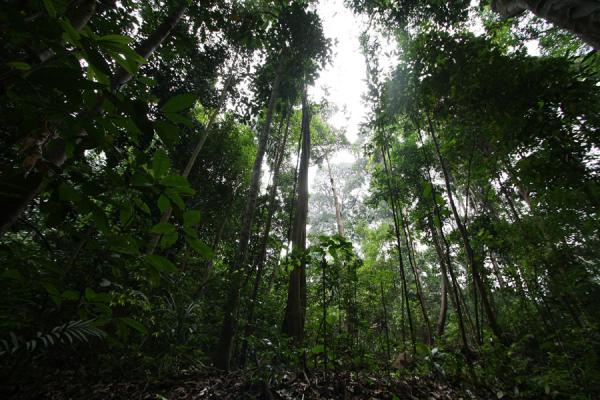
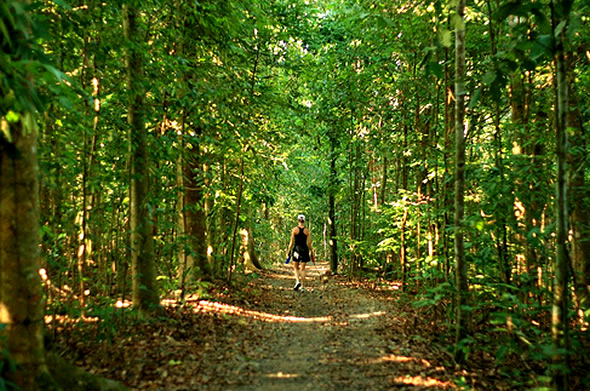
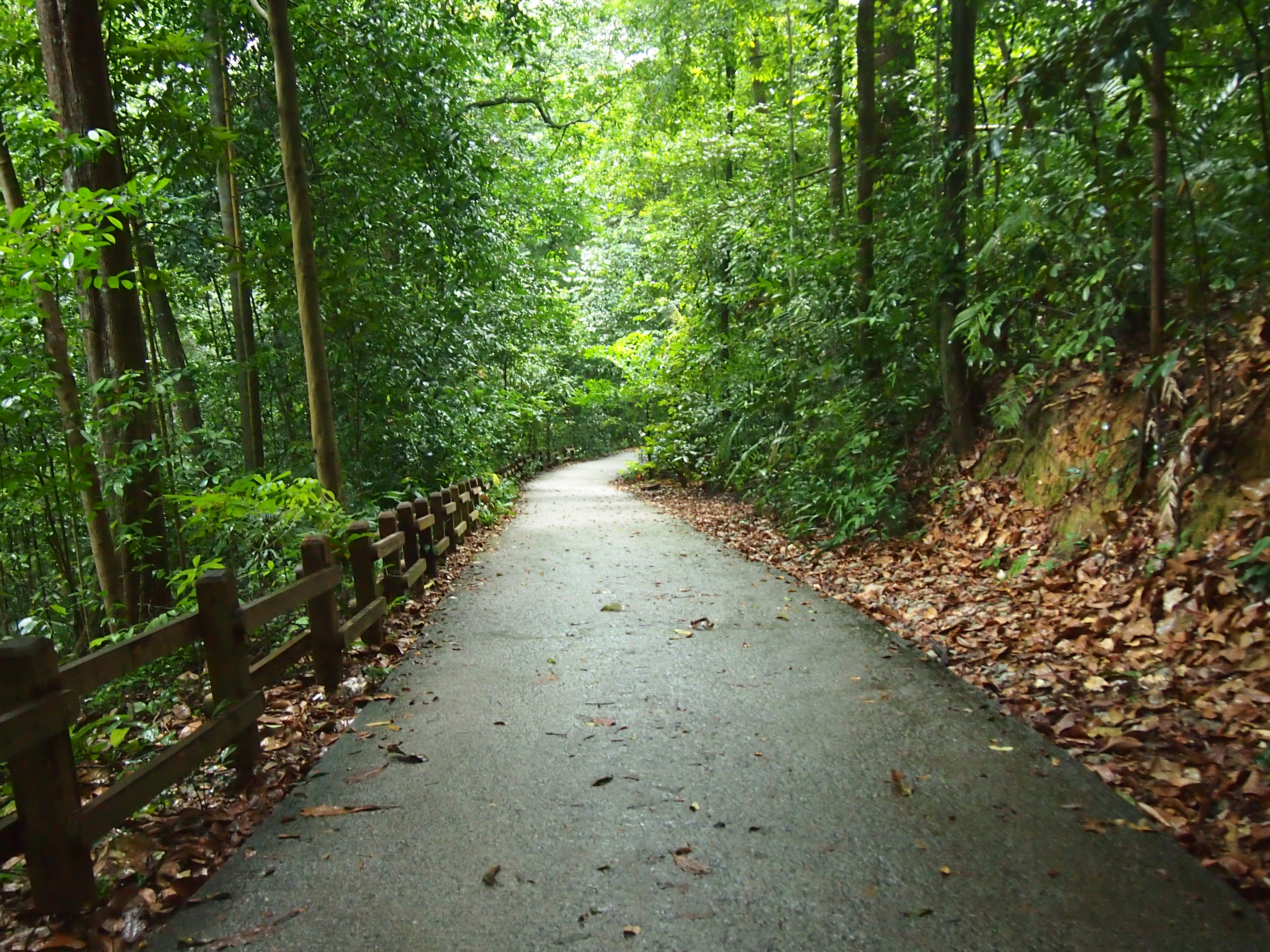
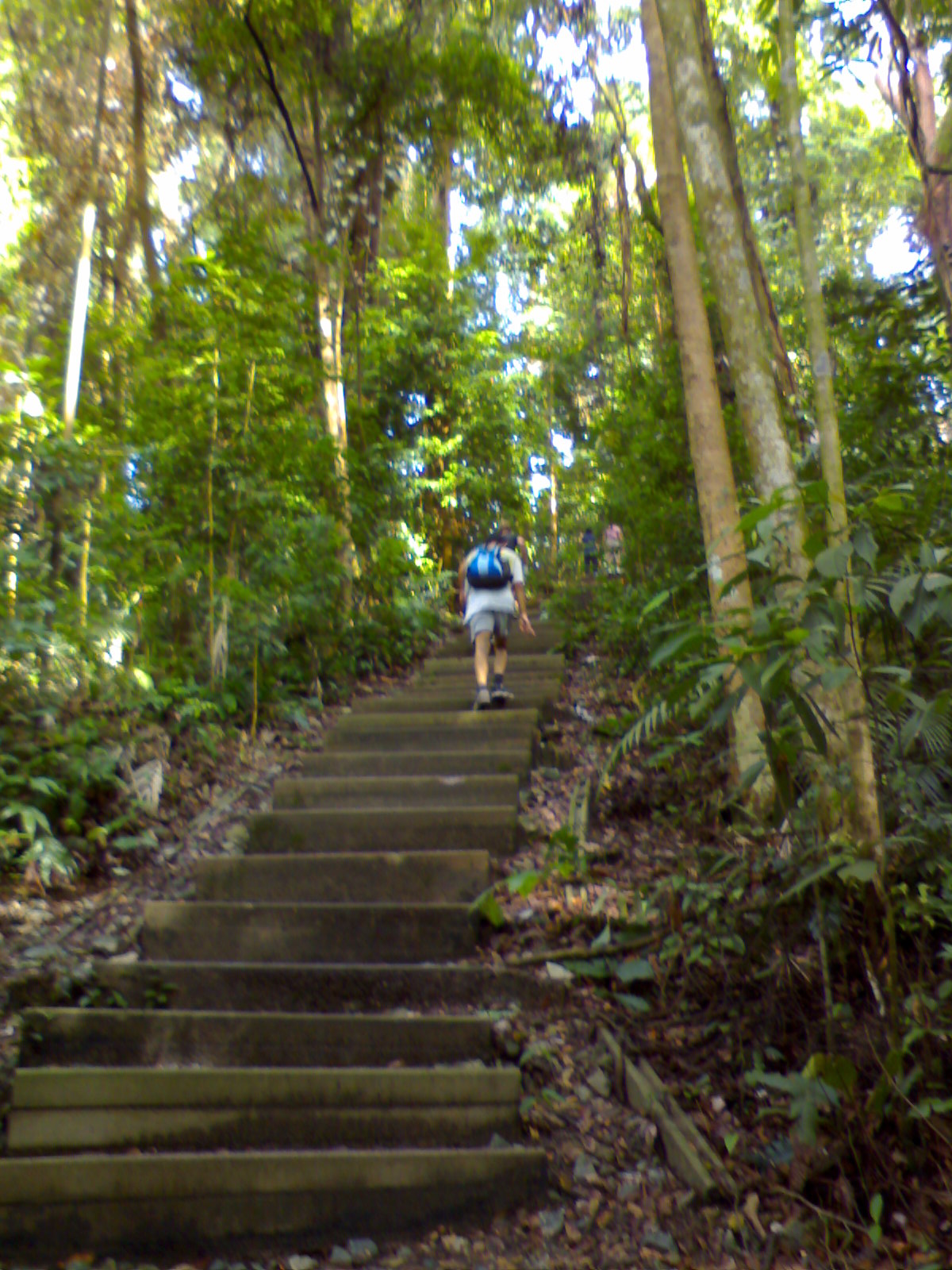
The Bukit Timah Nature Reserve (Chinese: 武吉知马自然保护区) is a small 1.64 square kilometer (400 acre) nature reserve near the geographic centre of the city-state of Singapore, located on the slopes of Bukit Timah Hill, Singapore’s highest hill standing at a height of 163.63 metres, and parts of the surrounding area. The nature reserve is about 12 kilometres from the Downtown Core, Singapore’s central business district.Despite its small size, it is considered one of the most productive pieces of nature, particularly by Alfred Russel Wallace. Together with the neighbouring Central Catchment Nature Reserve, it houses over 840 species of flowering plants and over 500 species of fauna.[1] Today, it is one of the largest patches of primary rainforest left in Singapore. The forest reserve was formally declared as an ASEAN Heritage Park on 18 October 2011.The primary activities at Bukit Timah are strolling, running and hiking. There are also smaller groups of people who rock-climb and abseil at the Dairy Farm quarry as well as mountain biking. There are specially-allocated mountain-bike trails. The Reserve is Popular among athletes training for mountain-climbing.Naturalists also treasure Bukit Timah for its variety of plants and animals. Some of the common plants there are the rattan, figs, and macaranga. Common animals include millipedes, carpenter bees, and many different types of birds and insects. The highest hill in Singapore is at Bukit Batok and Bukit Timah.

Bukit Timah Nature Reserve

Bukit Timah Nature Reserve

HistoryEdit

In 1882, Nathaniel Cantley, then Superintendent of the Singapore Botanic Gardens, was commissioned by the Government of the Straits Settlements to prepare a report on the forests of the settlements. On Cantley’s recommendation, several forest reserves were created on Singapore island over the next few years. Bukit Timah was one of the first forest reserves established in 1883.All the reserves were worked for timber with the exception of Bukit Timah Reserve.[4] By 1937, the forest reserves were depleted under economic pressures for development. However, three areas, including the Bukit Timah Reserve, were retained for the protection of flora and fauna under the management of the Singapore Botanic Gardens.In 1951, further protection of the reserves were provided by the enactment of a Nature Reserves Ordinance and the establishment of a Nature Reserves Board for the administration of the reserves, now designated as nature reserves, which total some 28 square kilometres in area.
Today, the nature reserves are set aside for the propagation, protection and preservation of the indigenous flora and fauna of Singapore under the National Parks Act and are managed by the National Parks Board.

Must SeeEdit

Popular

Visiting TimeEdit

6 am – 7 pm.

Closed OnEdit

N.A.

Best Season to VisitEdit

June to July and November to December.

Best Time To VisitEdit

N.A.

Time Required for SightseeingEdit

N.A.

Ticket Required : No Edit

Individual National Adult  : N.A.

Kids : N.A.

Individual Foreigner Adult  : N.A.

Kids : N.A.

Still Photo Camera : N.A.

Video Camera  : N.A.

Guide Required : No Edit

Approximate cost: N.A.

Dress Code (If Any) : No Edit

Dress Require: N.A.

Restaurants NearbyAdd / Edit

  • Riders Cafe Pte. Ltd. ;  51 Fairways Dr Singapore 286965 ; Ph/M –  65 6466 9819 ; Food Serve –  poached eggs · the pancakes · eggs benedict · brunch menu · french toast.

How to ReachEdit

Taxi : Taxis are generally very hard to get during peak hours (Mon-Fri 7:00am – 9:30am and Mon-Sat 5:00pm – 8:00pm) and on rainy days. If you are at a hotel, have conceirge call you a taxi. If you are out about town and have access to a cell phone- calling for a taxi will cut your wait time by 20 to 30 minutes. All taxis are fitted with meters; all are air conditioned; the majority of the taxis are 5-seaters; about 90% of taxis have radiophones; call booking is done via GPS or digital voice dispatch. All passengers must fasten their seat belts by law.
For taxi Booking fee is SGD $2.3. Minimum fare for taxi is SGD $3 for first 1Km. Fare above minimum fare until 10Km is SGD $0.55 per Km. Fare above 10Km is charge SGD $0.628 per Km. Taxi Waiting charges per hour is SGD $17.6. Peak Hours charges is diffrent.

Bus : Public buses run daily from 5.30am to midnight. Extended night services cost slightly more (a flat rate ranging from $1.50-$3.00). Otherwise, most fares depend on distance travelled and range from 67 cents to $1.58 for air-conditioned comfort (almost all public buses in Singapore have air-conditioning today). There are also “feeder” bus services that charge a flat rate of 67 cents. Each bus should not take more than 15 to 20 minutes to arrive at the bus stop.

Train : Singapore MRT system is very well connected to different parts of Singapore and very clean! If you have the time and plan to explore around little Sunny island, get the the Singapore Tourist Pass!
It runs 6am-12mn, fares start at S$1 (70cents in EZ link). Tickets can be purchased in all MRT stations. You just have to insert your money through the ticket machine. Rush hour’s usually 7am-9am, 11am-2pm and 4pm-7pm.

Air : Changi Airport is the country’s main airport. From the airport there are a number of ways to get into the city:
Taxi is easiest – simply follow the signs after clearing customs. Meters are always used in Singapore and prices are reasonable. A trip to the city during the day will be between $20-$30 including $3-5 airport surcharge. An additional 50% surcharge applies between midnight and 06:00.
Limousines charge a flat $50 to anywhere in the city and are a pretty good deal after midnight, as you can skip the queue and avoid the surcharge. The same pricing applies to chartering van-sized MaxiCabs, which are good for large families or if you have lots of baggage.
Shuttle – Shared six-seater MaxiCab shuttle service to designated areas/hotels costs $7 and can be booked in advance or in the arrivals hall. 6AM-2AM, every 15-30 min.
Subway – MRT trains run from a station between T2 and T3, but you’ll need to change trains at Tanah Merah to a city-bound train: just exit through the left hand side door and cross the platform. The 30 min ride to City Hall station costs $1.90 plus a refundable $1 deposit, and trains run 05:31-23:18.
Bus – Bus terminals can be found in the basements of T1, T2 and T3. 06:00-23:59 only. Fares are less than $2.00, exact fare required (no change given) if you pay cash.

Others : N.A.

Things to CarryEdit

  • Keep all food, including prayer offerings, in the house.

Safety / WarningEdit

  • Avoid growing fruit trees, vegetables or spices in your garden.
  • Do not feed the monkeys and advise those whom you see feeding not to do
  • Do not eat or drink outdoors, especially when there are monkeys present. Food will attract the monkeys to the area.

HelplineEdit

  • Police: 999
  • Emergencies/Ambulance/Fire Brigade: 999
  • Police Hotline: 1800 353 0000
  • Non-emergency ambulance: 1777
  • Flight Information (24-hours): 1800-542 4422
  • Tourism Information (24-hours): 1800-736 2000
Gallery

View All Sight of Singapore… Click Here

Merlion Park & Statue

Sentosa Island

Esplanade Theatres

Bukit Brown Cemetery

Singapore /Singapore /Singapore

Sight Address : Lorong Halwa, Singapore, Singapore.Edit

Detail InformationEdit

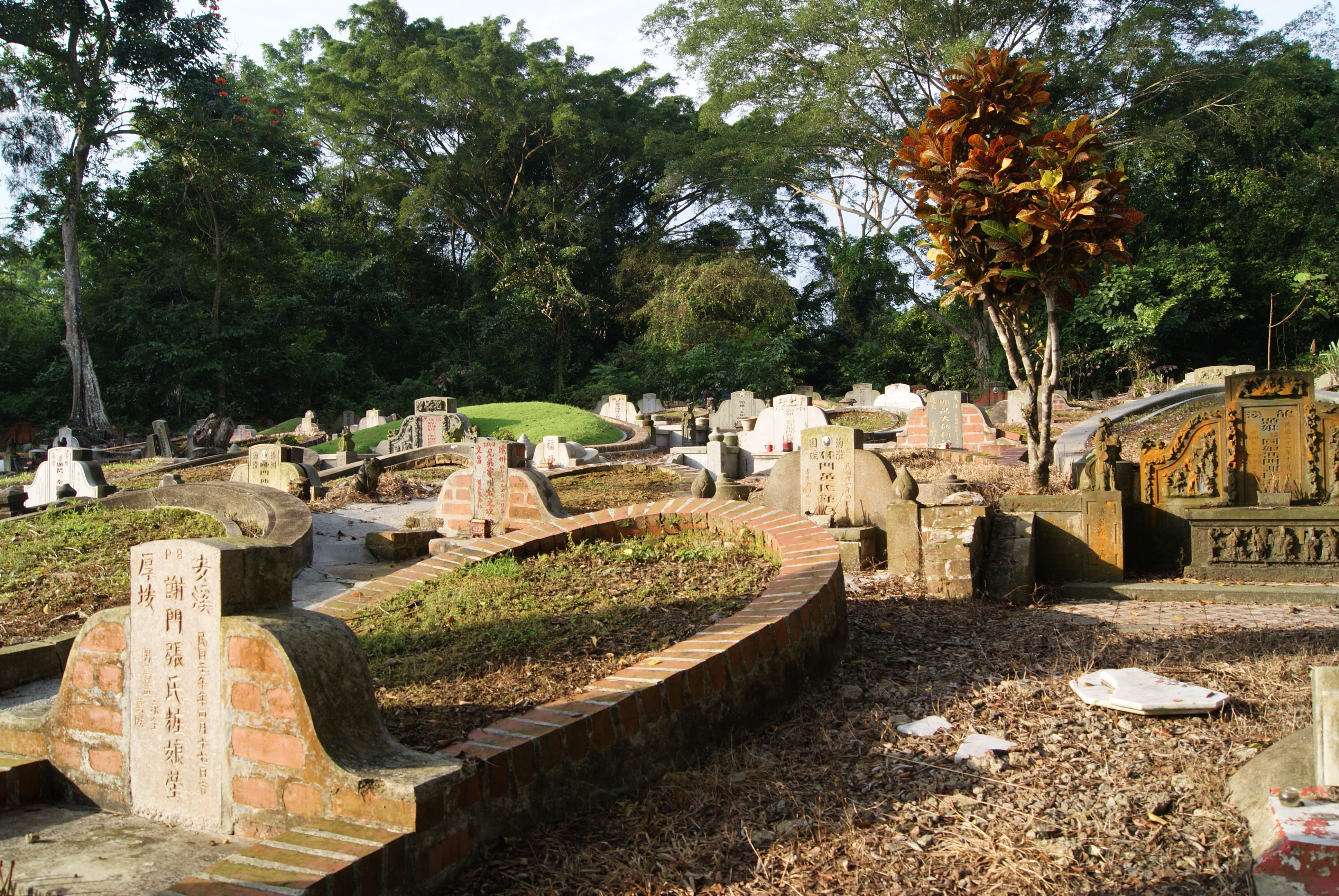
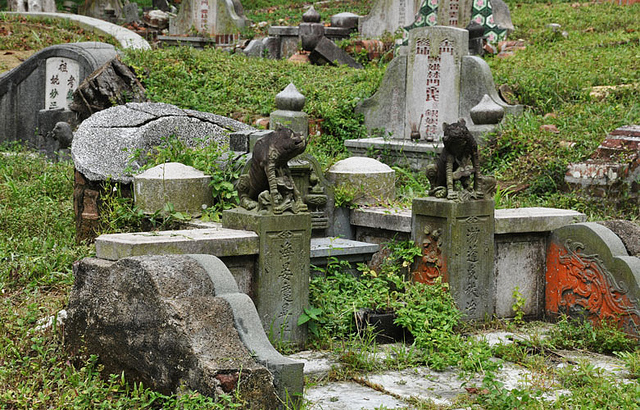
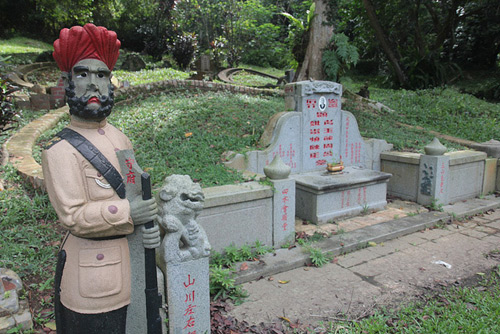
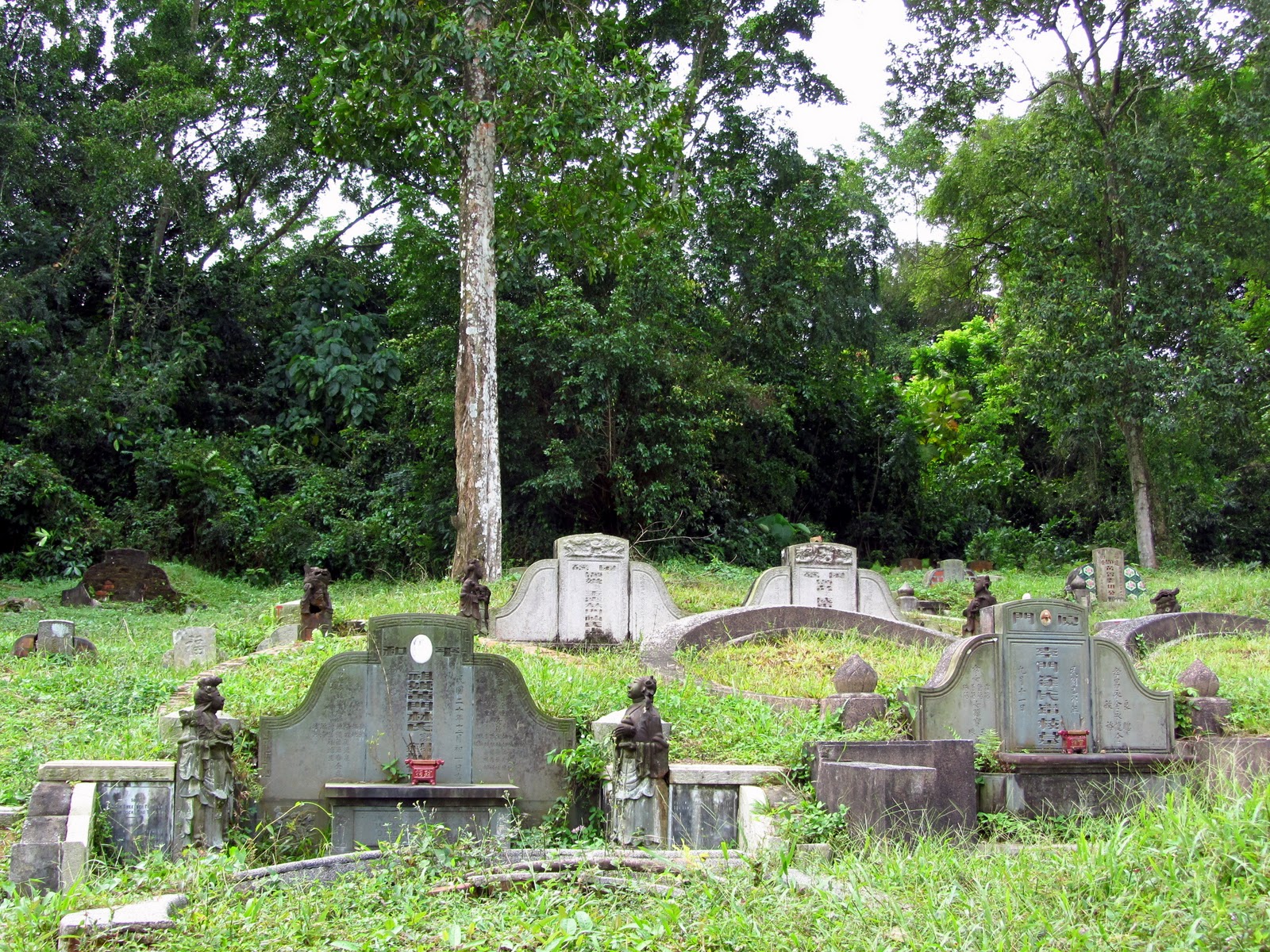
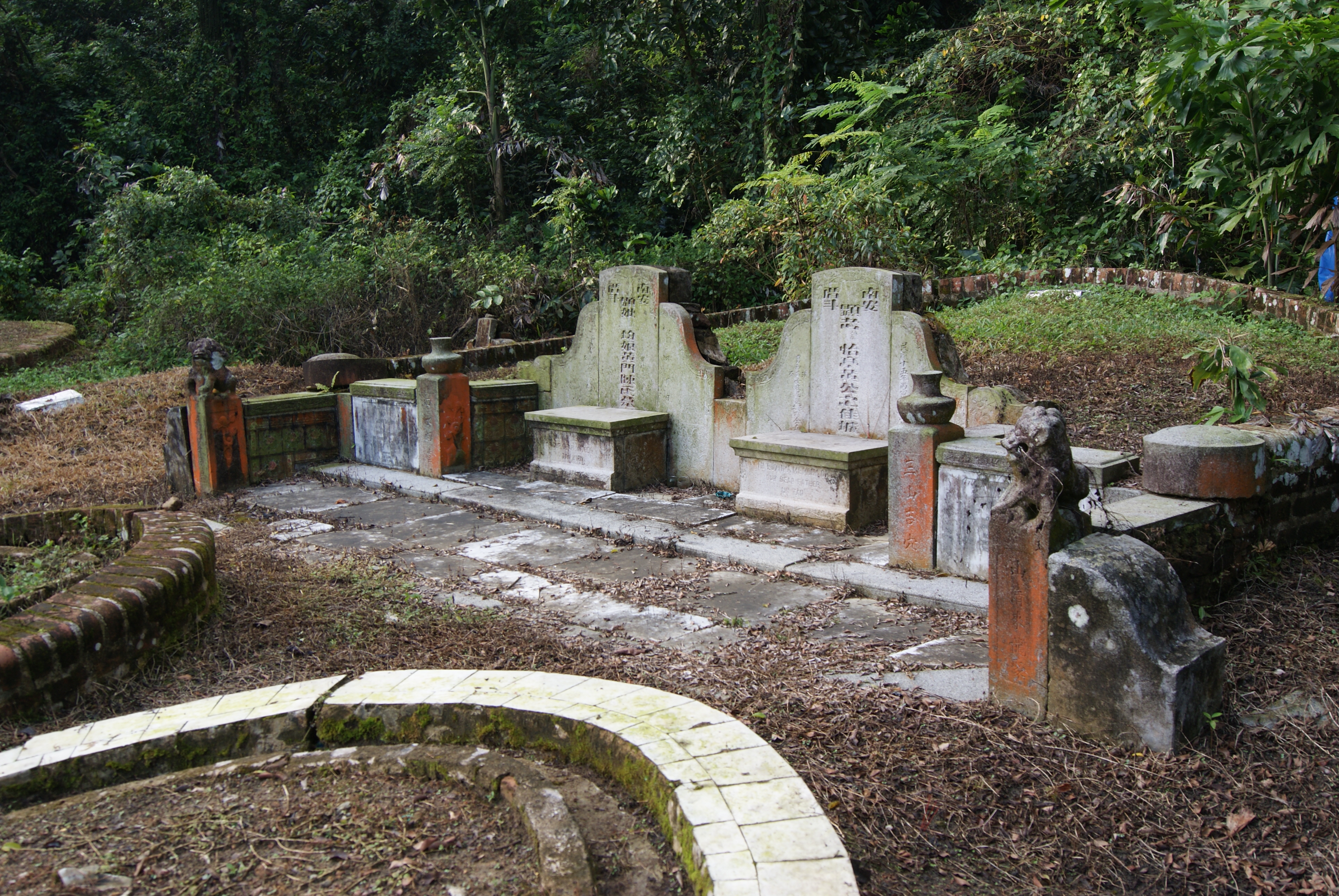
Estimated to house 100,000 tombs in a vast landsize of about 0.86 square kilometers, Bukit Brown Cemetery has been abandoned since its closure in 1973. It was opened in 1922 by the Municipal Council (Municipal Council oversaw the supplies of water, electricity, gas, maintenance of roads, lighting and other administrative things in Singapore before 1965).A small portion of Bukit Brown Cemetery is cut off by Pan-Island Expressway (PIE) and Mount Pleasant Road, forming present-day Mount Pleasant Cemetery. Mount Pleasant Road was formerly the place of residence of George Henry Brown (1826 – ?), a British trader who arrived in Singapore in the 1840s and built his business here. Bukit Brown was therefore named after him, as well as a road called Bukit Brown Road in 1923 which had since been defunct.Lornie Road, developed before 1965, is the major road to cut through Bukit Brown. There is a series of minor roads running in the cemetery itself. Many are nameless except for Sime Road, Kheam Hock Road and Lorong Halwa. Kheam Hock Road was named after the Municipal Commissioner Tan Kheam Hock (1862 – 1922), who pushed for the site to be expanded as a public burial ground for the early Chinese community.Many famous Chinese pioneers were buried at Bukit Brown, such as Tan Lark Sye (1897 – 1975), entrepreneur and co-founder of Nanyang University, Eu Tong Sen’s mother Eu Kong (Eu Tong Sen Road was named after him), Lim Chong Pang (Chong Pang village), Chew Joo Chiat (Joo Chiat estate), Gan Eng Seng (Gan Eng Seng School) and Chew Boon Lay (Boon Lay new town).

Bukit Brown Cemetery

Bukit Brown Cemetery

HistoryEdit

By 1929, Bukit Brown Cemetery accounted for about 40 per cent of all officially registered Chinese burials within municipal limits. The cemetery was eventually closed. In the 1970s, the cemetery faced the threat of being cleared for redevelopment, but it was eventually granted reprieve. Now, the cemetery is home to many bird species and wild life, and has as such become Popular again–this time, with nature lovers.It is the only “built” area that is near the Bukit Brown MRT Station (part of the Circle MRT Line). Since there are no other developments in the vicinity, the station will remain non-operational till a later date.It was originally announced by Minister Tan Chuan-Jin in Feb 2012 that 5000, out of more than 100000 graves, would make way for a new 4-lane road that would cut through the cemetery.This number was reduced to 3746, from the original 5000, on 19 Mar 2012.[14][15][16] It was also revealed that the rest of the cemetery would make way for a new public housing town in about 40 years time.

Must SeeEdit

Attraction.

Visiting TimeEdit

6 am at 9:30 pm.

Closed OnEdit

N.A.

Best Season to VisitEdit

June to July and November to December.

Best Time To VisitEdit

N.A.

Time Required for SightseeingEdit

N.A.

Ticket Required : No Edit

Individual National Adult  : N.A.

Kids : N.A.

Individual Foreigner Adult  : N.A.

Kids : N.A.

Still Photo Camera : N.A.

Video Camera  : N.A.

Guide Required : No Edit

Approximate cost: N.A.

Dress Code (If Any) : No Edit

Dress Require: N.A.

Restaurants NearbyAdd / Edit

  • Hatched ;  26 Evans Rd Singapore 259367 ; Ph/M –  65 6735 0012 ; Food Serve –  American Restaurant.

How to ReachEdit

Taxi : Taxis are generally very hard to get during peak hours (Mon-Fri 7:00am – 9:30am and Mon-Sat 5:00pm – 8:00pm) and on rainy days. If you are at a hotel, have conceirge call you a taxi. If you are out about town and have access to a cell phone- calling for a taxi will cut your wait time by 20 to 30 minutes. All taxis are fitted with meters; all are air conditioned; the majority of the taxis are 5-seaters; about 90% of taxis have radiophones; call booking is done via GPS or digital voice dispatch. All passengers must fasten their seat belts by law.
For taxi Booking fee is SGD $2.3. Minimum fare for taxi is SGD $3 for first 1Km. Fare above minimum fare until 10Km is SGD $0.55 per Km. Fare above 10Km is charge SGD $0.628 per Km. Taxi Waiting charges per hour is SGD $17.6. Peak Hours charges is diffrent.

Bus : Public buses run daily from 5.30am to midnight. Extended night services cost slightly more (a flat rate ranging from $1.50-$3.00). Otherwise, most fares depend on distance travelled and range from 67 cents to $1.58 for air-conditioned comfort (almost all public buses in Singapore have air-conditioning today). There are also “feeder” bus services that charge a flat rate of 67 cents. Each bus should not take more than 15 to 20 minutes to arrive at the bus stop.

Train : Singapore MRT system is very well connected to different parts of Singapore and very clean! If you have the time and plan to explore around little Sunny island, get the the Singapore Tourist Pass!
It runs 6am-12mn, fares start at S$1 (70cents in EZ link). Tickets can be purchased in all MRT stations. You just have to insert your money through the ticket machine. Rush hour’s usually 7am-9am, 11am-2pm and 4pm-7pm.

Air : Changi Airport is the country’s main airport. From the airport there are a number of ways to get into the city:
Taxi is easiest – simply follow the signs after clearing customs. Meters are always used in Singapore and prices are reasonable. A trip to the city during the day will be between $20-$30 including $3-5 airport surcharge. An additional 50% surcharge applies between midnight and 06:00.
Limousines charge a flat $50 to anywhere in the city and are a pretty good deal after midnight, as you can skip the queue and avoid the surcharge. The same pricing applies to chartering van-sized MaxiCabs, which are good for large families or if you have lots of baggage.
Shuttle – Shared six-seater MaxiCab shuttle service to designated areas/hotels costs $7 and can be booked in advance or in the arrivals hall. 6AM-2AM, every 15-30 min.
Subway – MRT trains run from a station between T2 and T3, but you’ll need to change trains at Tanah Merah to a city-bound train: just exit through the left hand side door and cross the platform. The 30 min ride to City Hall station costs $1.90 plus a refundable $1 deposit, and trains run 05:31-23:18.
Bus – Bus terminals can be found in the basements of T1, T2 and T3. 06:00-23:59 only. Fares are less than $2.00, exact fare required (no change given) if you pay cash.

Others : N.A.

Things to CarryEdit

Safety / WarningEdit

  • Please be advised that all bags and personal items are subject to inspection.

HelplineEdit

  • Police: 999
  • Emergencies/Ambulance/Fire Brigade: 999
  • Police Hotline: 1800 353 0000
  • Non-emergency ambulance: 1777
  • Flight Information (24-hours): 1800-542 4422
  • Tourism Information (24-hours): 1800-736 2000
Gallery

View All Sight of Singapore… Click Here

Merlion Park & Statue

Sentosa Island

Esplanade Theatres

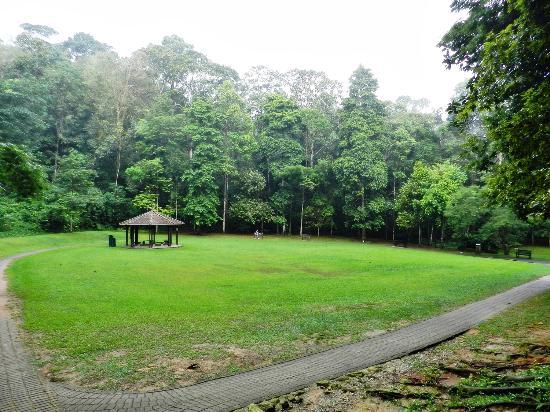
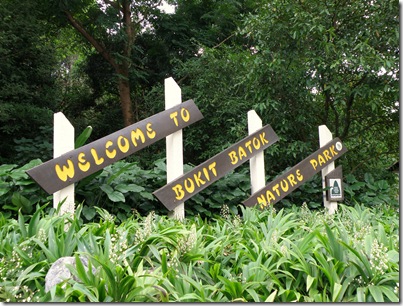
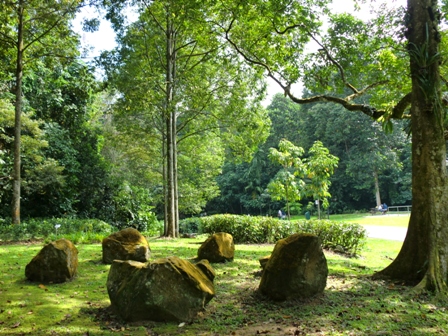
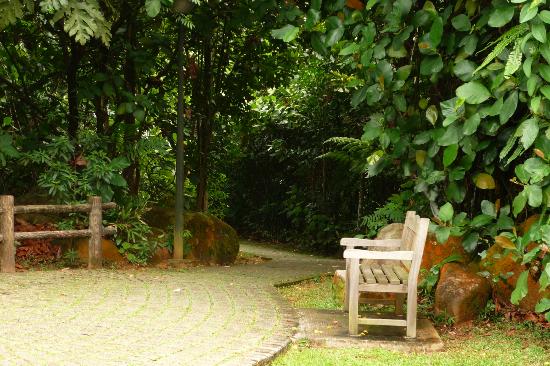
Bukit Batok Nature Park

Singapore /Singapore /Singapore

Sight Address : Bukit Batok East Avenue 2, Singapore 659840, Singapore.Edit

Detail InformationEdit

During World War ll, Lorong Sesuai site was selected by the Japanese as a memorial for the soldiers who died. The two pillars and 120 concrete steps leading to a transmission tower are the only remains. The significance and meaning of the location is conveyed to visitors via a memorial plaque that lies at the foot of the stairs. The park was later developed on an abandoned quarry site in 1988.Bukit Batok used to be a sleepy rural area with forest, farm lands and factories. Granite quarrying was among the early activities there since the 1950s. In fact Bukit Batok in Malay means “Coughing Hills” as the blasting made the hills appear to be coughing. Public housing in the area started in the 1970s.The former Ford Factory is the venue where the British surrender to the Japanese on 15 Feb 1942. The front portion of this building has been conserved as a historical monument.At the top of Bukit Batok hill is the site of two memorials built by the Japanese for their war dead as well as for the Allied soldiers. Both were demolished by the Japanese. Today, all that remains are two pillars and 120 concrete steps leading up to the transmission tower. The National Heritage Board had erected a plaque highlighting the significance of the site.

Bukit Batok Nature Park

Bukit Batok Nature Park

HistoryEdit

N.A.

Must SeeEdit

Attraction

Visiting TimeEdit

Lighted Hours: 7:00 pm to 7:00 am

Closed OnEdit

N.A.

Best Season to VisitEdit

June to July and November to December.

Best Time To VisitEdit

N.A.

Time Required for SightseeingEdit

N.A.

Ticket Required : No Edit

Individual National Adult  : N.A.

Kids : N.A.

Individual Foreigner Adult  : N.A.

Kids : N.A.

Still Photo Camera : N.A.

Video Camera  : N.A.

Guide Required : No Edit

Approximate cost: N.A.

Dress Code (If Any) : No Edit

Dress Require: N.A.

Restaurants NearbyAdd / Edit

  • Kim’s Family Food ;  17 Lorong Kilat Singapore 598139 ; Ph/M –  65 6465 0535 ; Food Serve –  Korean Restaurant.

How to ReachEdit

Taxi : Taxis are generally very hard to get during peak hours (Mon-Fri 7:00am – 9:30am and Mon-Sat 5:00pm – 8:00pm) and on rainy days. If you are at a hotel, have conceirge call you a taxi. If you are out about town and have access to a cell phone- calling for a taxi will cut your wait time by 20 to 30 minutes. All taxis are fitted with meters; all are air conditioned; the majority of the taxis are 5-seaters; about 90% of taxis have radiophones; call booking is done via GPS or digital voice dispatch. All passengers must fasten their seat belts by law.
For taxi Booking fee is SGD $2.3. Minimum fare for taxi is SGD $3 for first 1Km. Fare above minimum fare until 10Km is SGD $0.55 per Km. Fare above 10Km is charge SGD $0.628 per Km. Taxi Waiting charges per hour is SGD $17.6. Peak Hours charges is diffrent.

Bus : Public buses run daily from 5.30am to midnight. Extended night services cost slightly more (a flat rate ranging from $1.50-$3.00). Otherwise, most fares depend on distance travelled and range from 67 cents to $1.58 for air-conditioned comfort (almost all public buses in Singapore have air-conditioning today). There are also “feeder” bus services that charge a flat rate of 67 cents. Each bus should not take more than 15 to 20 minutes to arrive at the bus stop.

Train : Singapore MRT system is very well connected to different parts of Singapore and very clean! If you have the time and plan to explore around little Sunny island, get the the Singapore Tourist Pass!
It runs 6am-12mn, fares start at S$1 (70cents in EZ link). Tickets can be purchased in all MRT stations. You just have to insert your money through the ticket machine. Rush hour’s usually 7am-9am, 11am-2pm and 4pm-7pm.

Air : Changi Airport is the country’s main airport. From the airport there are a number of ways to get into the city:
Taxi is easiest – simply follow the signs after clearing customs. Meters are always used in Singapore and prices are reasonable. A trip to the city during the day will be between $20-$30 including $3-5 airport surcharge. An additional 50% surcharge applies between midnight and 06:00.
Limousines charge a flat $50 to anywhere in the city and are a pretty good deal after midnight, as you can skip the queue and avoid the surcharge. The same pricing applies to chartering van-sized MaxiCabs, which are good for large families or if you have lots of baggage.
Shuttle – Shared six-seater MaxiCab shuttle service to designated areas/hotels costs $7 and can be booked in advance or in the arrivals hall. 6AM-2AM, every 15-30 min.
Subway – MRT trains run from a station between T2 and T3, but you’ll need to change trains at Tanah Merah to a city-bound train: just exit through the left hand side door and cross the platform. The 30 min ride to City Hall station costs $1.90 plus a refundable $1 deposit, and trains run 05:31-23:18.
Bus – Bus terminals can be found in the basements of T1, T2 and T3. 06:00-23:59 only. Fares are less than $2.00, exact fare required (no change given) if you pay cash.

Others : N.A.

Things to CarryEdit

Safety / WarningEdit

  • Please be advised that all bags and personal items are subject to inspection.

HelplineEdit

  • Police: 999
  • Emergencies/Ambulance/Fire Brigade: 999
  • Police Hotline: 1800 353 0000
  • Non-emergency ambulance: 1777
  • Flight Information (24-hours): 1800-542 4422
  • Tourism Information (24-hours): 1800-736 2000
Gallery

View All Sight of Singapore… Click Here

Merlion Park & Statue

Sentosa Island

Esplanade Theatres

Buddha Tooth Relic Temple and Museum

Singapore /Singapore /Singapore

Sight Address : 288 S Bridge Rd, Singapore 058840.Edit

Detail InformationEdit

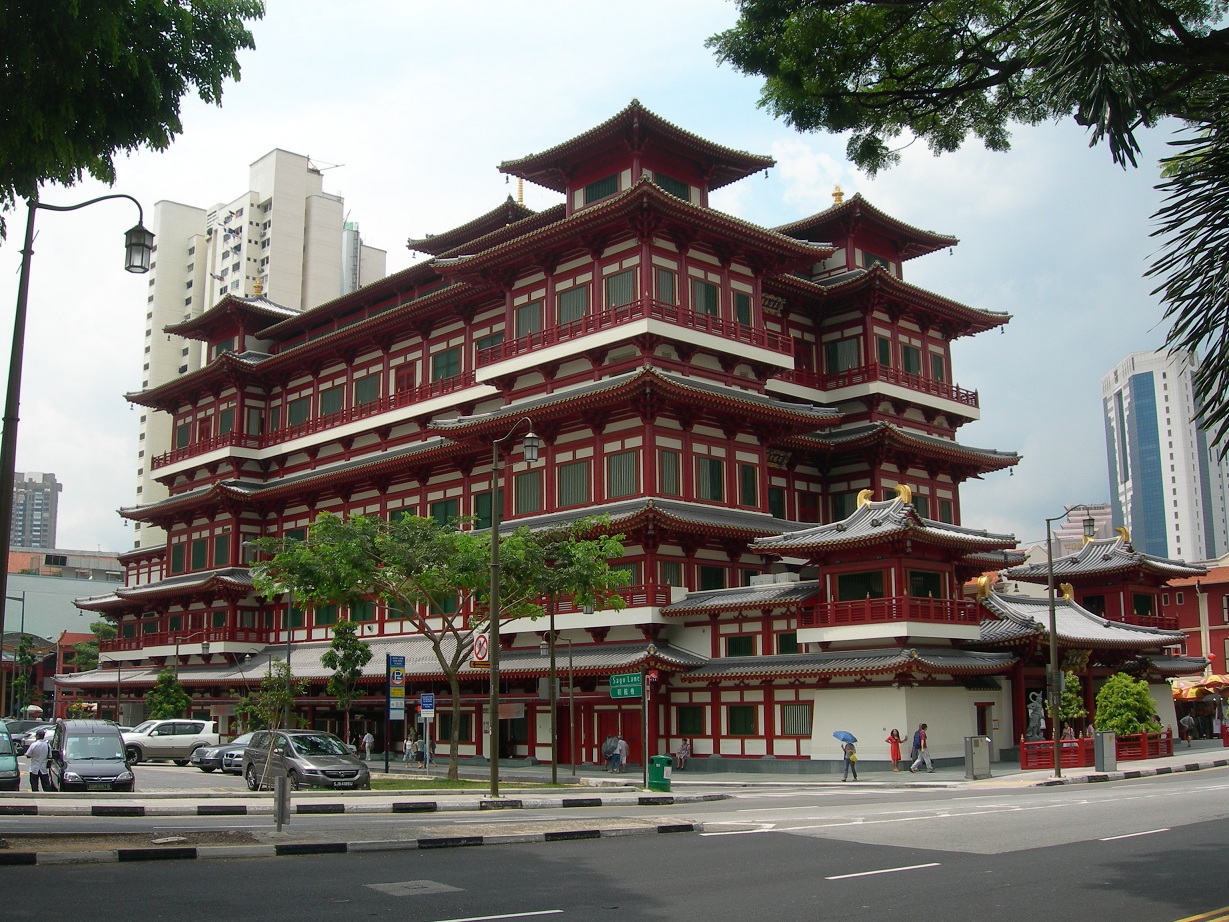
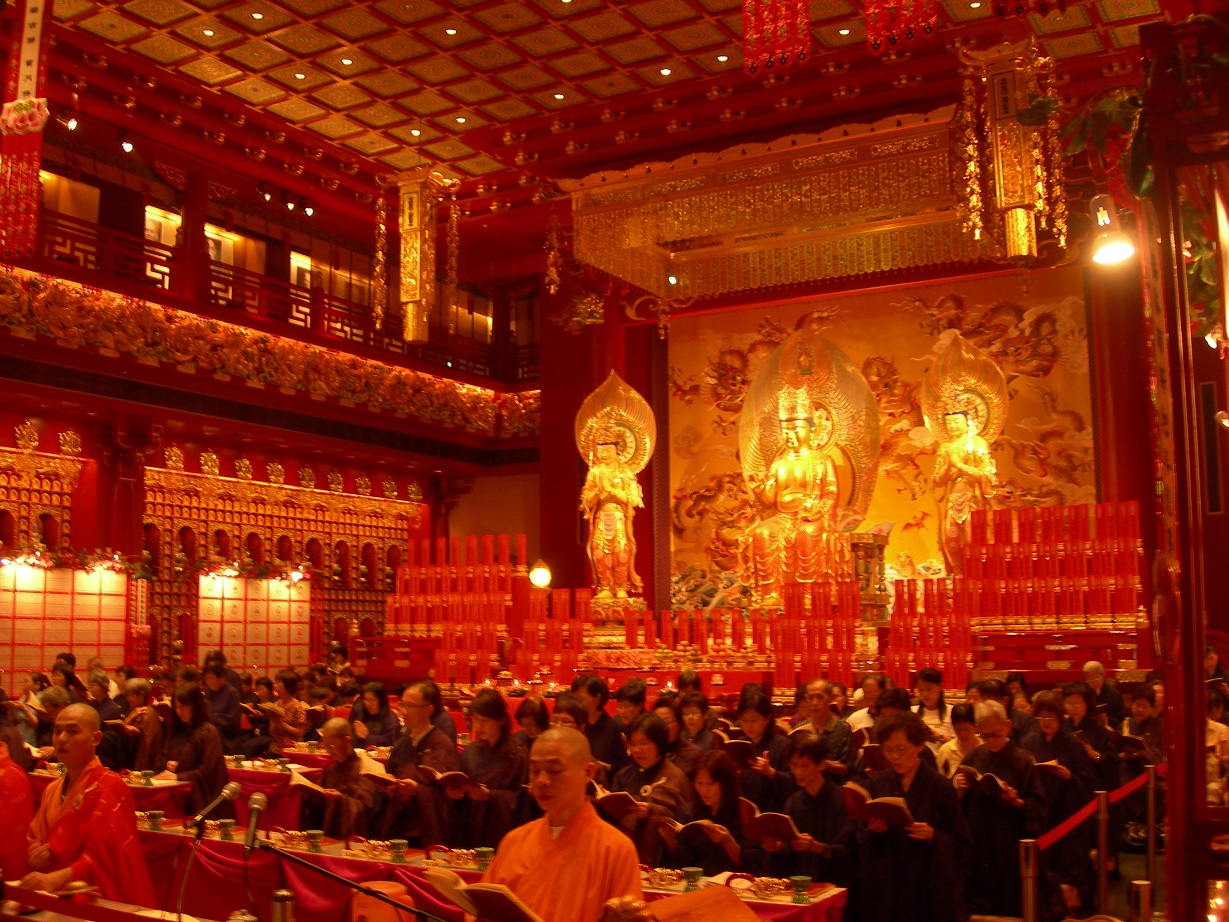
The Buddha Tooth Relic Temple and Museum is a Buddhist temple and museum complex located in the Chinatown district of Singapore.”The temple is based on the Tang dynasty architectural style and built to house the tooth relic of the historical Buddha. The ground breaking ceremony was conducted on 13 March 2005. Costing S$62 million and 2 years later, a soft launch was held to coincide with the 2007 Vesak Day celebration.”It is claimed that the relic of Buddha from which it gains its name was found in 1980 in a collapsed stupa in Myanmar.Since opening, the temple has become a Popular attraction within Chinatown. Simple vegetarian fare is served in the basement of the temple, though donations are accepted.The Buddha Tooth Relic Temple & Museum is a living cultural monument in the heart of Chinatown featuring exhibitions relating to various facets of religious arts and culture of Singapore. It also houses what Buddhist leaders regard as the Sacred Buddha Tooth Relic in a stupa composed of 320kg of gold donated by devotees.The building was conceptualised and designed by local venerable Shi Fa Zhao, aided by a team of local and overseas consultants. Its grand design is based on the elements and history of Tang Dynasty and the Buddhist Mandala, the latter which is a representation of the Buddhist universe. So expect to find lots of references to both aspects, such as bone and tongue relic elements. The temple prides itself on the research made to ensure accuracy and authenticity on the design and monuments found here. Other highlights found in this building include the Buddhist Culture Museum, Eminent Sangha Museum, Tripitaka Chamber, and a Theatre for cultural performances, talks and films.

Buddha Tooth Relic Temple and Museum

Buddha Tooth Relic Temple and Museum

HistoryEdit

N.A.

Must SeeEdit

Popular

Visiting TimeEdit

Buddhist Culture Museum and Relic Chamber 9 am – 6 pm
Emiment Sangha Museum 7am – 7pm

Closed OnEdit

N.A.

Best Season to VisitEdit

June to July and November to December.

Best Time To VisitEdit

N.A.

Time Required for SightseeingEdit

N.A.

Ticket Required : No Edit

Individual National Adult  : N.A.

Kids : N.A.

Individual Foreigner Adult  : N.A.

Kids : N.A.

Still Photo Camera : N.A.

Video Camera  : N.A.

Guide Required : No Edit

Approximate cost: N.A.

Dress Code (If Any) : No Edit

Dress Require: N.A.

Restaurants NearbyAdd / Edit

  • Eight Treasures Vegetarian ;  282 S Bridge Rd Singapore 058831 ; Ph/M –  65 6226 3886 ; Food Serve –  Vegetarian Restaurant.

How to ReachEdit

Taxi : Taxis are generally very hard to get during peak hours (Mon-Fri 7:00am – 9:30am and Mon-Sat 5:00pm – 8:00pm) and on rainy days. If you are at a hotel, have conceirge call you a taxi. If you are out about town and have access to a cell phone- calling for a taxi will cut your wait time by 20 to 30 minutes. All taxis are fitted with meters; all are air conditioned; the majority of the taxis are 5-seaters; about 90% of taxis have radiophones; call booking is done via GPS or digital voice dispatch. All passengers must fasten their seat belts by law.
For taxi Booking fee is SGD $2.3. Minimum fare for taxi is SGD $3 for first 1Km. Fare above minimum fare until 10Km is SGD $0.55 per Km. Fare above 10Km is charge SGD $0.628 per Km. Taxi Waiting charges per hour is SGD $17.6. Peak Hours charges is diffrent.

Bus : Public buses run daily from 5.30am to midnight. Extended night services cost slightly more (a flat rate ranging from $1.50-$3.00). Otherwise, most fares depend on distance travelled and range from 67 cents to $1.58 for air-conditioned comfort (almost all public buses in Singapore have air-conditioning today). There are also “feeder” bus services that charge a flat rate of 67 cents. Each bus should not take more than 15 to 20 minutes to arrive at the bus stop.

Train : Singapore MRT system is very well connected to different parts of Singapore and very clean! If you have the time and plan to explore around little Sunny island, get the the Singapore Tourist Pass!
It runs 6am-12mn, fares start at S$1 (70cents in EZ link). Tickets can be purchased in all MRT stations. You just have to insert your money through the ticket machine. Rush hour’s usually 7am-9am, 11am-2pm and 4pm-7pm.

Air : Changi Airport is the country’s main airport. From the airport there are a number of ways to get into the city:
Taxi is easiest – simply follow the signs after clearing customs. Meters are always used in Singapore and prices are reasonable. A trip to the city during the day will be between $20-$30 including $3-5 airport surcharge. An additional 50% surcharge applies between midnight and 06:00.
Limousines charge a flat $50 to anywhere in the city and are a pretty good deal after midnight, as you can skip the queue and avoid the surcharge. The same pricing applies to chartering van-sized MaxiCabs, which are good for large families or if you have lots of baggage.
Shuttle – Shared six-seater MaxiCab shuttle service to designated areas/hotels costs $7 and can be booked in advance or in the arrivals hall. 6AM-2AM, every 15-30 min.
Subway – MRT trains run from a station between T2 and T3, but you’ll need to change trains at Tanah Merah to a city-bound train: just exit through the left hand side door and cross the platform. The 30 min ride to City Hall station costs $1.90 plus a refundable $1 deposit, and trains run 05:31-23:18.
Bus – Bus terminals can be found in the basements of T1, T2 and T3. 06:00-23:59 only. Fares are less than $2.00, exact fare required (no change given) if you pay cash.

Others : N.A.

Things to CarryEdit

Safety / WarningEdit

  • Please be advised that all bags and personal items are subject to inspection.

HelplineEdit

  • Police: 999
  • Emergencies/Ambulance/Fire Brigade: 999
  • Police Hotline: 1800 353 0000
  • Non-emergency ambulance: 1777
  • Flight Information (24-hours): 1800-542 4422
  • Tourism Information (24-hours): 1800-736 2000
Gallery

View All Sight of Singapore… Click Here

Merlion Park & Statue

Sentosa Island

Esplanade Theatres